How Agile Enterprise Practices Accelerate Enterprise Modernization
Introduction: When Agility Becomes the Engine of Modernization
Enterprise modernization is not just about adopting new technologies - it’s about reinventing how an organization operates, adapts, and creates value in a constantly changing environment. Yet, most modernization efforts hit a familiar wall: they start with enthusiasm, get tangled in rigid processes, and slow down under the weight of legacy thinking.
This is where Agile Enterprise practices change the game. Originally born in software development, Agile principles have now evolved into an enterprise-wide philosophy that enables large organizations to modernize faster, reduce risk, and deliver continuous value.
At Sequentia, we’ve seen this firsthand: when enterprises apply Agile not just in development teams but across leadership, operations, and technology, modernization becomes not a one-time initiative—but a living, adaptive capability.
The Problem with Traditional Modernization Approaches
Many enterprises approach modernization as a large-scale project: define the roadmap, allocate a multi-year budget, and roll out technology upgrades in stages. On paper, it seems structured and predictable. In reality, it’s often slow, expensive, and disconnected from fast-changing business needs.
Traditional modernization often suffers from:
-
Long feedback loops, where business and IT work in silos.
-
Static plans, unable to adapt to new technologies or customer expectations.
-
Overly complex governance, which prioritizes compliance over innovation.
-
Cultural resistance, where teams cling to legacy systems and mindsets.
By the time such a transformation reaches deployment, the market has already shifted, and the “modernized” solution is partially outdated. The result? Modernization fatigue.
Agile enterprises avoid this trap. They treat modernization as a continuous journey rather than a linear project—one that evolves alongside the business.
Agile as the Catalyst for Enterprise Modernization
Agile isn’t a tool or methodology - it’s a mindset that values adaptability over predictability, collaboration over control, and delivery over documentation.
When applied at scale, Agile practices enable organizations to modernize incrementally, continuously, and intelligently. Instead of attempting massive rewrites or large-scale system overhauls, enterprises focus on building agility into every layer of their ecosystem—from people and processes to platforms and culture.
At Sequentia, we often help clients transition from traditional delivery models to Agile enterprises through structured modernization frameworks. This involves three major shifts:
-
From rigid planning to iterative value delivery – focusing on short, outcome-driven cycles.
-
From siloed teams to cross-functional squads – aligning business and IT on shared goals.
-
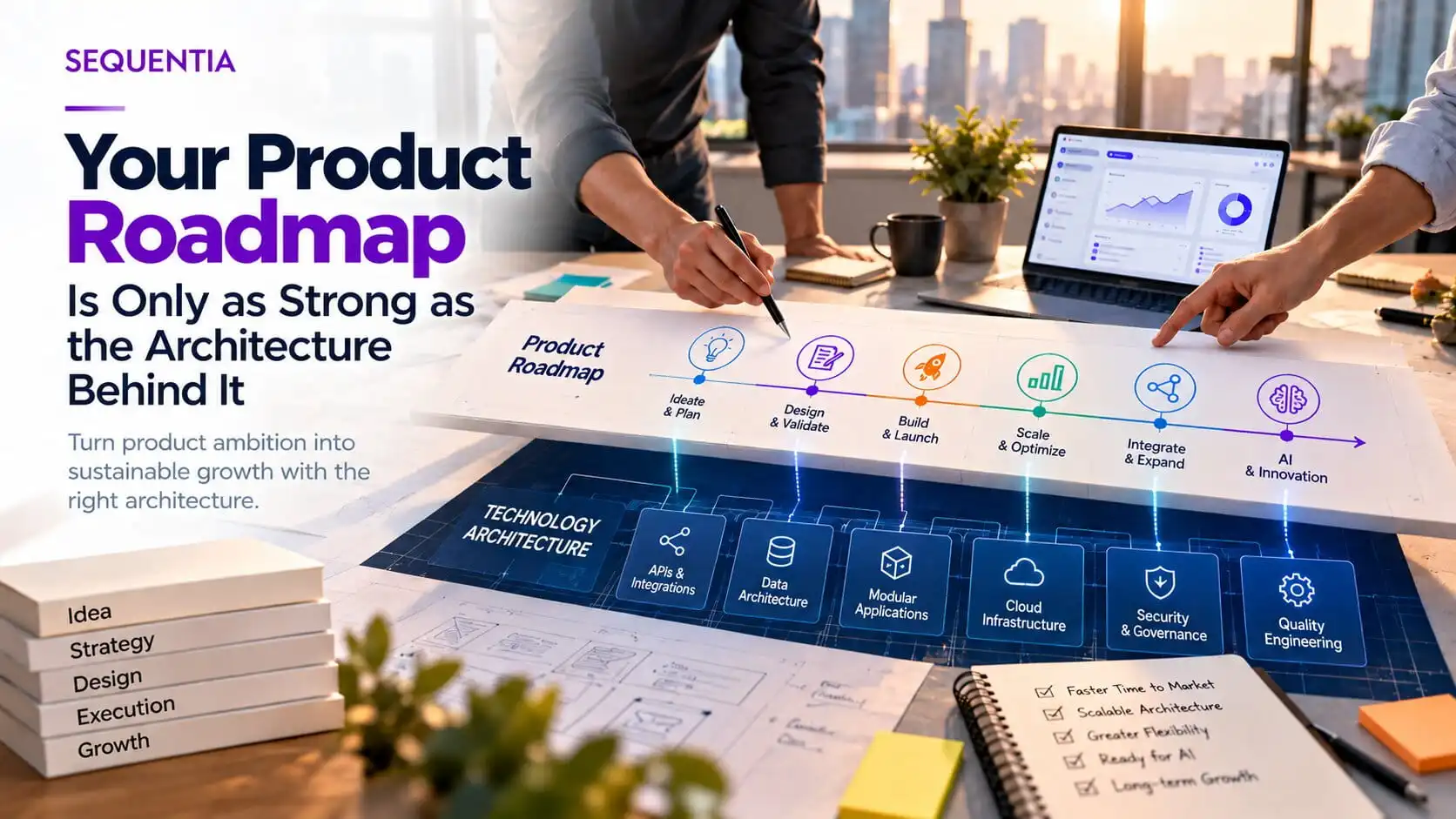
From legacy architecture to modular platforms – enabling faster scaling and integration.
These shifts aren’t just operational—they redefine how enterprises think about modernization.
Agile Teams as the Foundation of Modernization
One of the most powerful aspects of Agile is its team structure. Modernization requires teams that can design, build, test, and deploy quickly while maintaining quality and alignment with business strategy.
Agile teams operate as self-organizing units with clear objectives, empowered decision-making, and continuous communication with stakeholders. They embrace practices such as continuous integration, test automation, and frequent feedback loops, ensuring that modernization doesn’t stall under bureaucracy.
This doesn’t mean chaos—it means discipline built around collaboration and learning. By empowering smaller, autonomous teams, enterprises avoid the bottlenecks that plague large-scale modernization programs.
At Sequentia, our Agile squads often include engineers, designers, business analysts, and quality experts working in unison. This collaborative structure not only accelerates modernization but ensures that each release is both technically sound and business-aligned.
Aligning Business Goals with Technical Modernization
Agile enterprise practices bridge a crucial gap: the one between business objectives and technology delivery.
In traditional models, IT executes what the business dictates, often with limited feedback until late in the process. Agile transforms this relationship into a continuous dialogue, where business leaders and technical teams collaborate to refine priorities, validate solutions, and measure outcomes in real time.
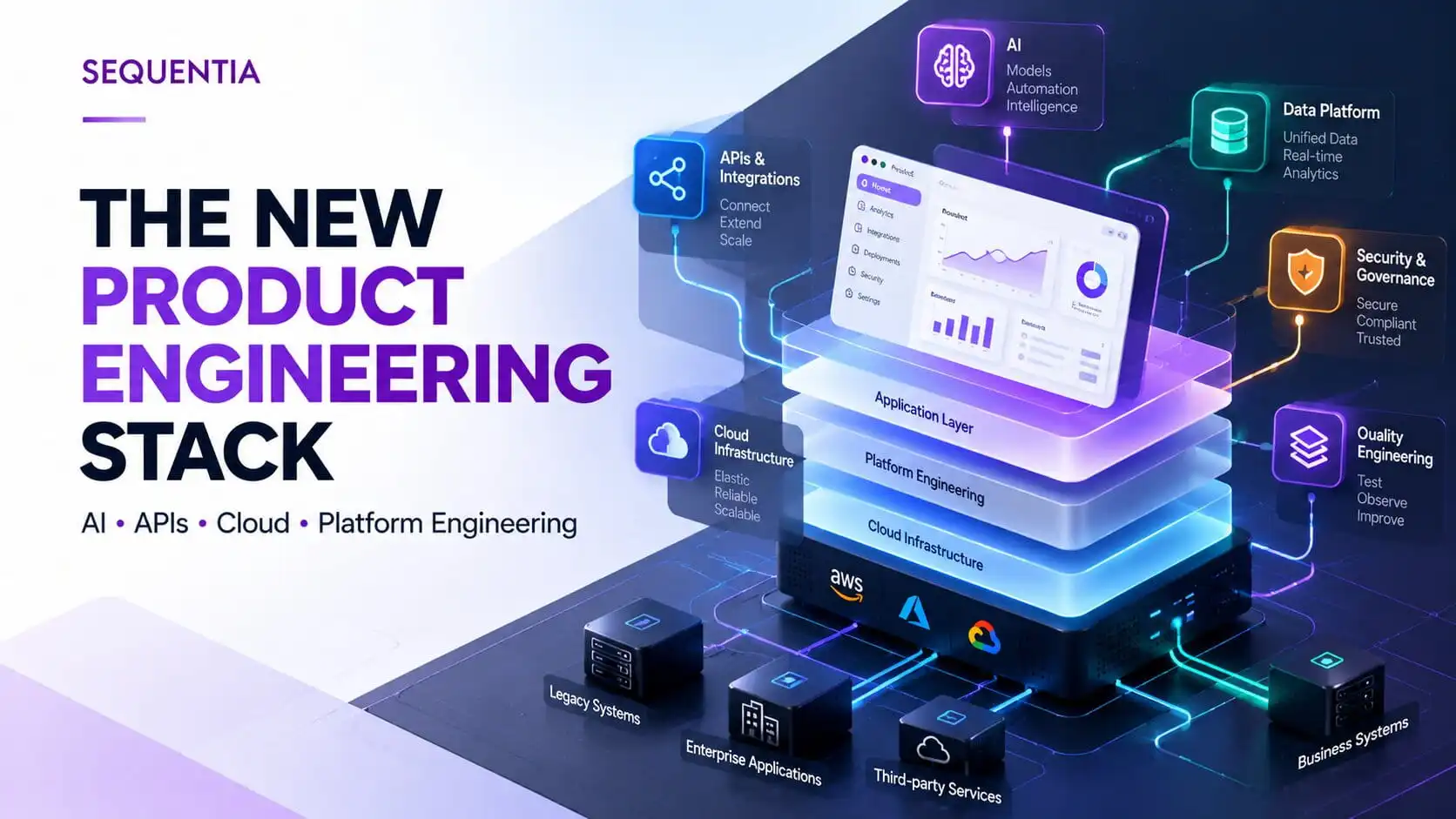
This alignment is vital during modernization, where choices like cloud migration, API-driven architecture, or microservices adoption directly impact operational models and customer experience.
Sequentia’s Agile Product Advisory Framework emphasizes this alignment by creating “shared accountability.” Business owners become product owners, and modernization initiatives are guided by tangible KPIs such as:
-
Reduced time-to-market
-
Enhanced scalability and uptime
-
Measurable cost savings
-
Customer experience improvements
In other words, modernization becomes an enterprise mission, not just an IT project.
The Role of Continuous Delivery and Automation
True enterprise agility thrives on automation. Continuous integration and continuous delivery (CI/CD) pipelines enable teams to push updates, test functionality, and release features faster - with confidence.
When modernization involves legacy systems, automation mitigates risk by ensuring that new modules integrate seamlessly without disrupting ongoing operations.
At Sequentia, we’ve seen measurable impact when clients embed CI/CD and automated testing within their modernization programs: deployment frequency improves by over 60%, release cycles shrink from months to days, and production defects decrease significantly.
This technical agility directly translates to business agility—helping enterprises adapt to market shifts, regulatory changes, or customer demands without costly delays.
Cultural Transformation: The Human Side of Agile Modernization
Agility isn’t just about software, it’s about people. No modernization initiative can succeed without a cultural shift toward openness, learning, and shared ownership.
Enterprises that thrive in modernization efforts actively cultivate Agile mindsets. Leaders encourage experimentation, teams celebrate learning over perfection, and departments collaborate across traditional boundaries.
For many legacy organizations, this means unlearning decades of top-down management and embracing psychological safety, the freedom to innovate without fear of failure.
At Sequentia, we often start Agile transformations with leadership workshops and change management programs. Because until leaders model agility, teams can’t practice it.
Once that shift occurs, modernization no longer feels imposed - it becomes part of the organization’s DNA.
Agile Governance: Balancing Speed and Stability
Enterprises often fear that Agile sacrifices governance for speed. In reality, Agile governance is about enabling informed decision-making at the right level, at the right time.
Instead of rigid review gates and lengthy approval cycles, Agile governance relies on real-time metrics, transparent dashboards, and feedback-driven accountability.
This model ensures that modernization efforts stay on track while maintaining compliance, security, and risk controls.
Sequentia’s modernization governance model blends traditional enterprise rigor with Agile responsiveness—ensuring that even in regulated industries, modernization remains fast, auditable, and secure.
Real-World Impact: From Legacy to Agile Enterprise
One of our recent enterprise clients, a regional banking group, struggled with fragmented legacy systems that slowed down new product launches. By introducing Agile teams, microservices architecture, and automated testing, they reduced release cycles by 70% and improved digital adoption by 45% in under a year.
Another client in manufacturing adopted Agile governance during their cloud migration journey. The result was faster decision-making, better vendor coordination, and significant cost savings without compromising security or compliance.
These examples show that modernization isn’t just a technology play- it’s a strategic transformation fueled by Agile principles.
Conclusion: Modernization Is an Ongoing Journey
Modernization isn’t a project with an end date it’s an ongoing evolution. And Agile enterprise practices provide the engine that keeps this evolution continuous, adaptive, and customer-focused.
When enterprises adopt Agile beyond IT embedding it into leadership, culture, and strategy, they create the resilience needed for long-term success.
At Sequentia, we believe enterprise modernization should never be a disruption, it should be an acceleration. With Agile enterprise practices at the core, organizations don’t just modernize their systems; they modernize their thinking.
.webp)
Pune
Sequentia Software Solutions Pvt Ltd
401, Koyna, Mohan Nagar,
Baner, Pune, Maharashtra - 411045.
Jalgaon
Sequentia Software Solutions Pvt Ltd
06, Rambhau Joshi Market, Opposite Golani Market, Navi Peth, Jalgaon, Maharashtra - 425001.