Leveraging API-Driven Development to Enhance Enterprise Agility
Introduction: The Agility Imperative in Modern Enterprises
In today’s fast-paced business environment, agility isn’t a competitive advantage - it’s a necessity. Enterprises must respond quickly to market shifts, innovate continuously, and scale operations efficiently. Yet, many organizations are hampered by monolithic legacy systems, fragmented data flows, and slow integration cycles.
This is where API-driven development becomes a transformative force. Beyond simply exposing endpoints or connecting applications, it provides a strategic framework for modern enterprises to become truly agile, modular, and responsive. At Sequentia, we’ve observed that organizations embracing API-first approaches achieve faster time-to-market, smoother integrations, and more reliable digital experiences.
The Limitations of Traditional Architectures
Legacy enterprise systems were designed for stability, not flexibility. While they have reliably supported core operations for decades, their rigid architectures create obstacles for modern innovation. Some common limitations include:
-
Tightly coupled components: A single change in one module can affect the entire system.
-
Slow release cycles: Adding new features often requires extensive testing and deployment overhead.
-
Integration challenges: Connecting legacy systems with cloud-native services or external partners can be slow and error-prone.
These challenges slow down innovation, increase costs, and create risk. Enterprises attempting digital transformation without addressing architectural constraints often experience delays, budget overruns, or partial adoption of new technologies.
Why API-Driven Development Matters
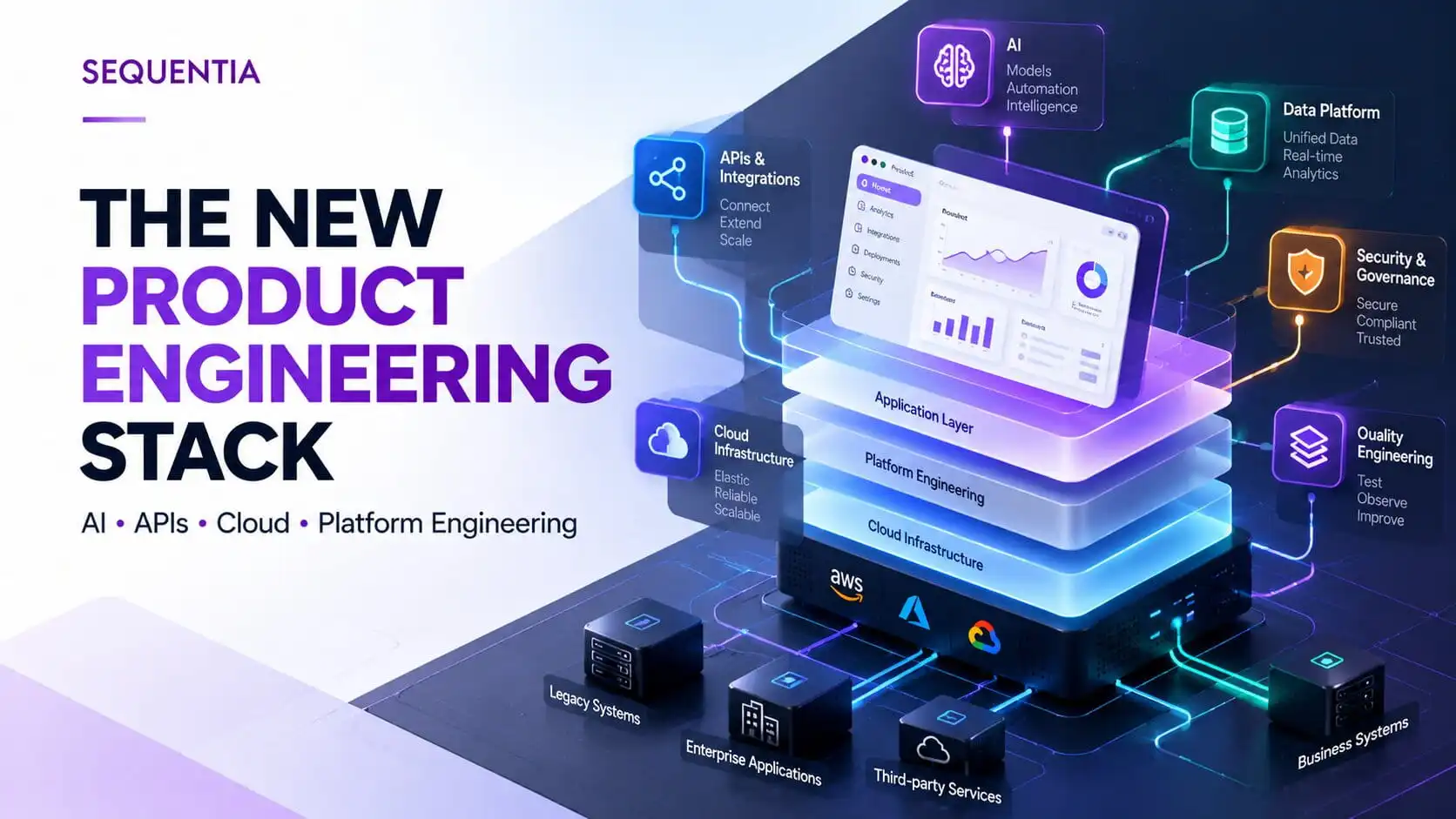
API-driven development addresses these challenges at their core. By making APIs the backbone of enterprise architecture, organizations can decouple services, enable interoperability, and facilitate incremental modernization. Key benefits include:
-
Modularity and flexibility: Services can be independently developed, deployed, and scaled.
-
Seamless integration: APIs create standard interfaces that connect legacy, cloud, and partner systems.
-
Faster innovation: Teams can launch new features or products without waiting for monolithic releases.
-
Operational resilience: API abstractions reduce the risk of cascading failures and simplify maintenance.
At Sequentia, we approach API-driven development not as a technical checkbox but as a strategic enabler of enterprise agility, ensuring IT systems support business goals rather than constrain them.
Building an API-First Enterprise
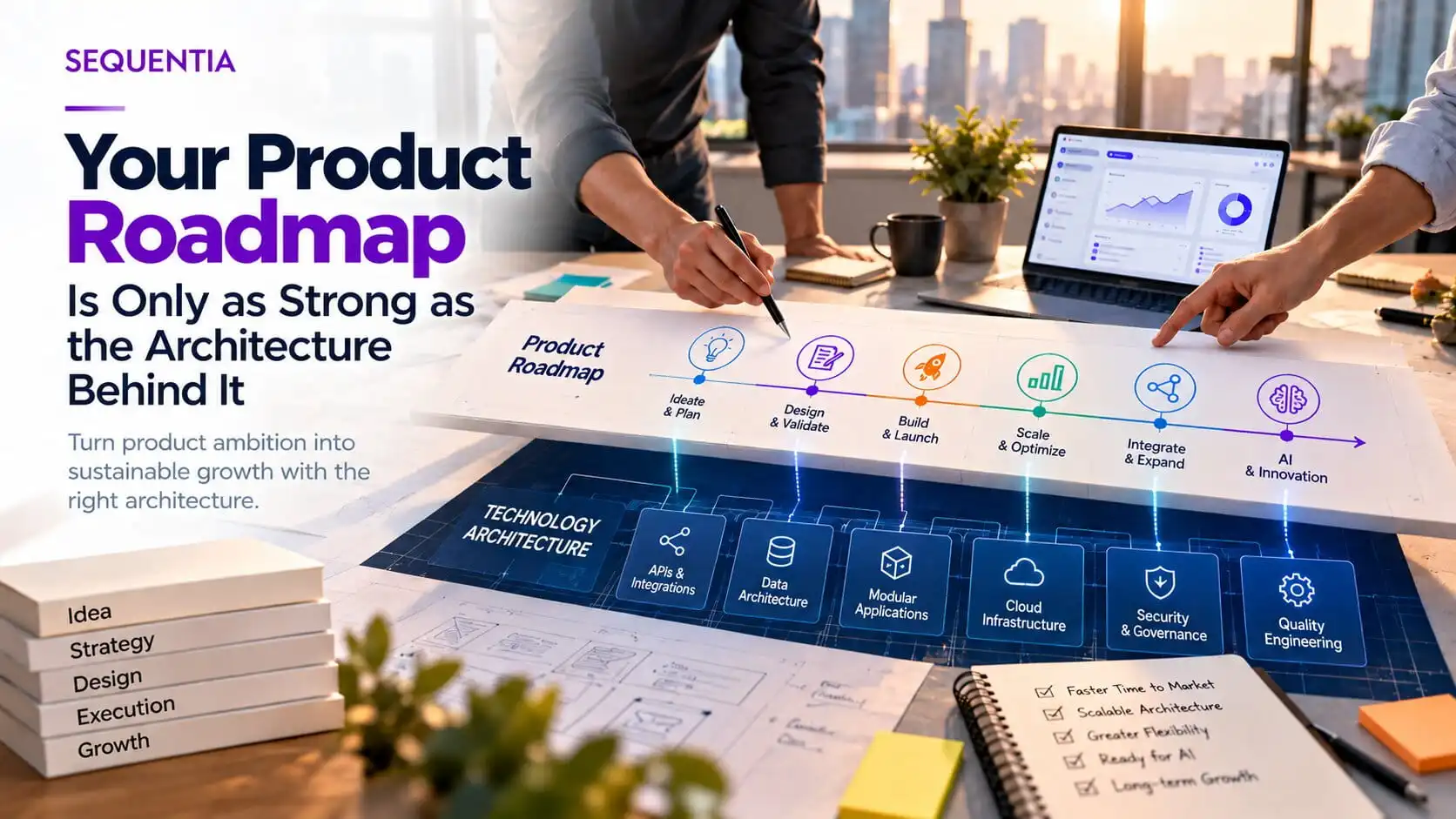
Implementing API-driven development requires more than writing endpoints. It’s a holistic approach involving strategy, governance, and culture. Enterprises that succeed focus on four critical dimensions:
1. Strategic Planning
Identify the business processes and systems that will benefit most from API integration. Prioritize initiatives that unlock immediate value, such as:
-
Customer-facing applications needing rapid iteration
-
Cross-department data sharing and automation
-
Integration with partners, marketplaces, or SaaS solutions
This prioritization ensures that API initiatives deliver measurable outcomes while minimizing disruption.
2. Architectural Modularity
Design services as loosely coupled components. Each service should operate independently, communicate via standardized APIs, and encapsulate specific business logic. Modular design enables:
-
Incremental modernization of legacy systems
-
Flexible scaling of high-demand services
-
Easier adoption of cloud or hybrid-cloud infrastructure
Modularity ensures enterprises can innovate iteratively rather than attempting disruptive “big bang” transformations.
3. Governance and Security
APIs are gateways to critical enterprise data and functionality. Proper governance ensures:
-
Standardized API design and documentation
-
Authentication, authorization, and auditing controls
-
Monitoring, logging, and performance metrics
This reduces security risks, ensures compliance, and creates confidence for internal and external stakeholders.
4. Incremental Deployment and Continuous Improvement
Rather than deploying APIs in one large rollout, adopt an iterative approach:
-
Release core APIs first
-
Monitor adoption, performance, and user feedback
-
Expand coverage gradually, optimizing for efficiency and reliability
Iterative deployment allows enterprises to test, learn, and scale safely, embedding agility into everyday operations.
Use Cases: Realizing Enterprise Agility
-
Legacy System Modernization
API layers decouple business logic from aging infrastructure, allowing enterprises to modernize incrementally without downtime. -
Hybrid Cloud Integration
APIs bridge on-premises systems with cloud-native applications, enabling hybrid cloud strategies while maintaining operational continuity. -
Automation and Orchestration
APIs enable workflows across departments, applications, and partners, increasing operational efficiency and reducing manual overhead. -
Digital Product Innovation
APIs support modular product development, allowing teams to experiment, iterate, and deploy new services rapidly.
Business Impact
Enterprises implementing API-driven development report tangible benefits:
-
Reduced time-to-market for new services
-
Improved operational efficiency and automation
-
Increased agility to respond to business and market changes
-
Reduced risk during modernization initiatives
APIs become more than a technical tool—they become the foundation for resilient, adaptive, and scalable enterprise operations.
API-driven development is no longer optional. It is a strategic imperative for enterprises seeking agility, scalability, and innovation. By adopting an API-first mindset, organizations can modernize legacy systems, integrate diverse applications, and accelerate digital transformation with confidence.
At Sequentia, we guide enterprises through every step of this journey—combining strategic advisory, architectural design, application engineering, and quality assurance. Together, we transform IT from a constraint into a growth enabler.
Ready to unlock enterprise agility through API-driven development? Contact Sequentia to explore a tailored modernization roadmap.
.webp)
Pune
Sequentia Software Solutions Pvt Ltd
401, Koyna, Mohan Nagar,
Baner, Pune, Maharashtra - 411045.
Jalgaon
Sequentia Software Solutions Pvt Ltd
06, Rambhau Joshi Market, Opposite Golani Market, Navi Peth, Jalgaon, Maharashtra - 425001.