Application Transformation: Balancing Innovation and Business Continuity
Introduction: The Tightrope of Modernization
Every enterprise today stands at a crossroads. On one side is the pressure to innovate, to adopt new technologies, and to deliver seamless digital experiences faster than ever before. On the other side lies the constant responsibility to maintain stability, protect critical operations, and preserve customer trust.
Walking this line between innovation and reliability defines what we call application transformation.
At Sequentia, we see this challenge every day. Businesses know that modernization is essential, but they cannot afford disruptions to the systems that keep them running. The goal, then, is not just to transform but to transform intelligently - to innovate while keeping the lights on.
This is the delicate balance between progress and continuity that defines successful modernization.
The Legacy Dilemma: When Stability Slows You Down
Legacy systems have carried enterprises for decades. They process billions in transactions, maintain regulatory compliance, and form the backbone of mission-critical operations. Yet, what once represented reliability now often stands in the way of agility.
Older architectures are difficult to integrate, costly to maintain, and too rigid to support the pace of digital innovation.
Many CIOs face a familiar problem. Their legacy applications cannot simply be replaced overnight, but maintaining them consumes the resources needed to move forward.
So the question is no longer if modernization should happen. It is how to modernize without jeopardizing what already works.
This is where strategic application transformation becomes a necessity.
What Application Transformation Really Means
Modernization is not about moving old systems to new platforms. Migration without transformation is simply relocation.
True application transformation rethinks how software is built, scaled, and integrated. It involves turning monolithic systems into modular, connected ecosystems that evolve with the business.
At Sequentia, we define application transformation as the process of reinventing legacy applications so that they remain relevant, efficient, and adaptable in a digital-first world.
Transformation is not replacement. It is renewal with purpose. The goal is to make existing systems more flexible, data-driven, and responsive without losing the stability that keeps them valuable.
Balancing Two Imperatives: Innovation and Continuity
Innovation and continuity are often seen as opposites, but in reality they are partners.
Innovation is about agility, experimentation, and speed. It demands cloud adoption, automation, AI, and rapid product releases.
Continuity is about control, consistency, and reliability. It demands uptime, compliance, and predictable performance.
A balanced transformation model allows both to coexist.
At Sequentia, we often describe this as the two-speed enterprise. One layer focuses on stability, ensuring mission-critical systems remain secure and operational. The other layer focuses on innovation, where new products and capabilities are built, tested, and refined quickly.
When these two speeds work together, enterprises modernize without disruption.
The Power of Architecture: Building for Evolution
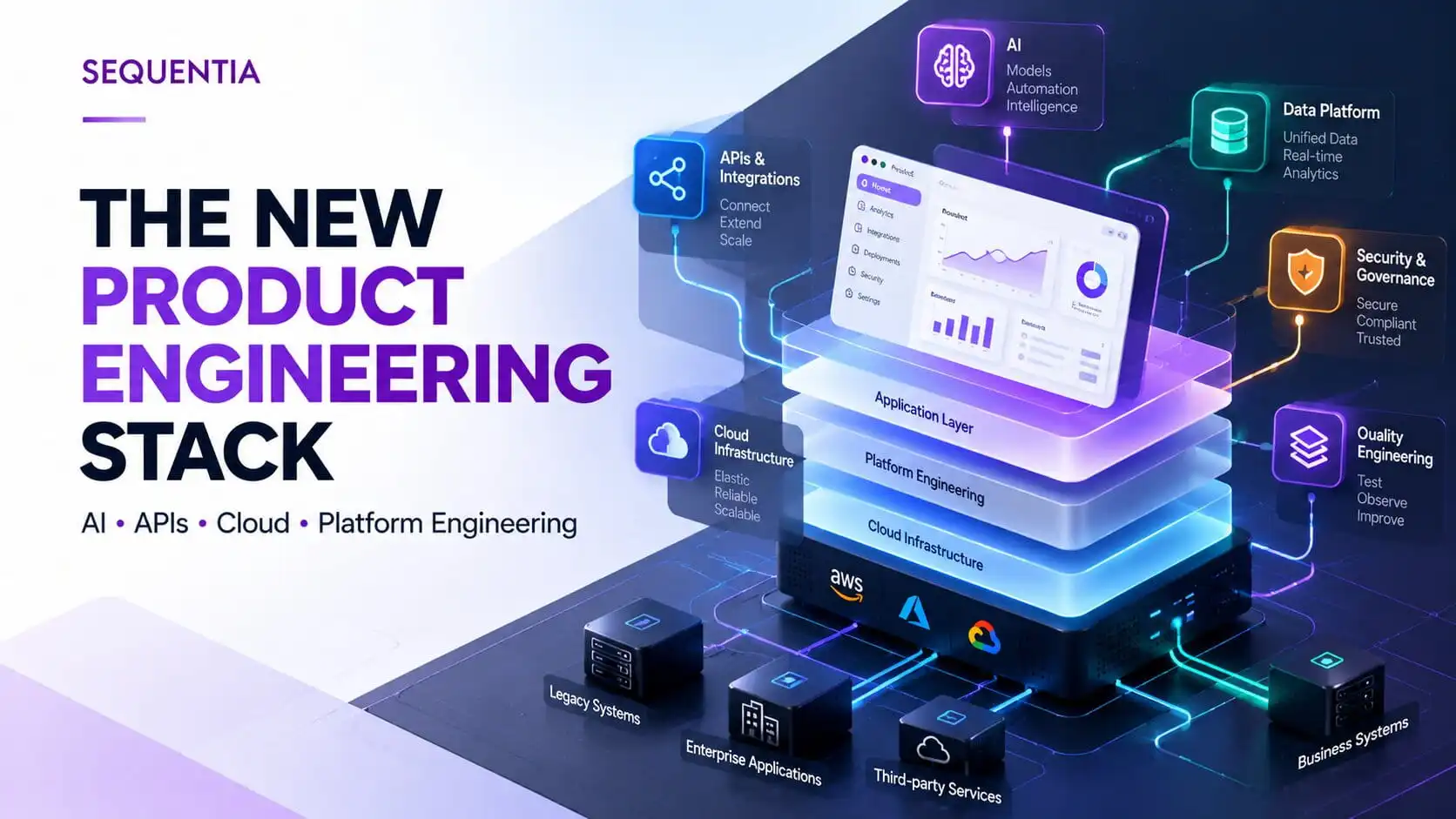
Architecture sits at the heart of transformation. Legacy applications were typically built as single, tightly coupled systems, which made them difficult to scale or modify.
Modern systems take a different approach. They are layered, modular, and connected, allowing different components to evolve independently.
Microservices and APIs play a critical role in this architecture.
Microservices break large applications into smaller, self-contained services such as authentication, billing, or notifications. These services can be updated or replaced individually without affecting the entire system.
APIs enable communication between these services, ensuring that systems, both new and old, can exchange data and functionality smoothly.
This modular design allows for incremental modernization, minimizing disruption while maximizing flexibility.
When architecture is designed for evolution instead of replacement, transformation becomes a continuous journey rather than a risky event.
A Phased Approach: Modernizing Without Downtime
Successful modernization does not happen all at once. The most resilient enterprises adopt a phased transformation strategy that prioritizes stability at every step.
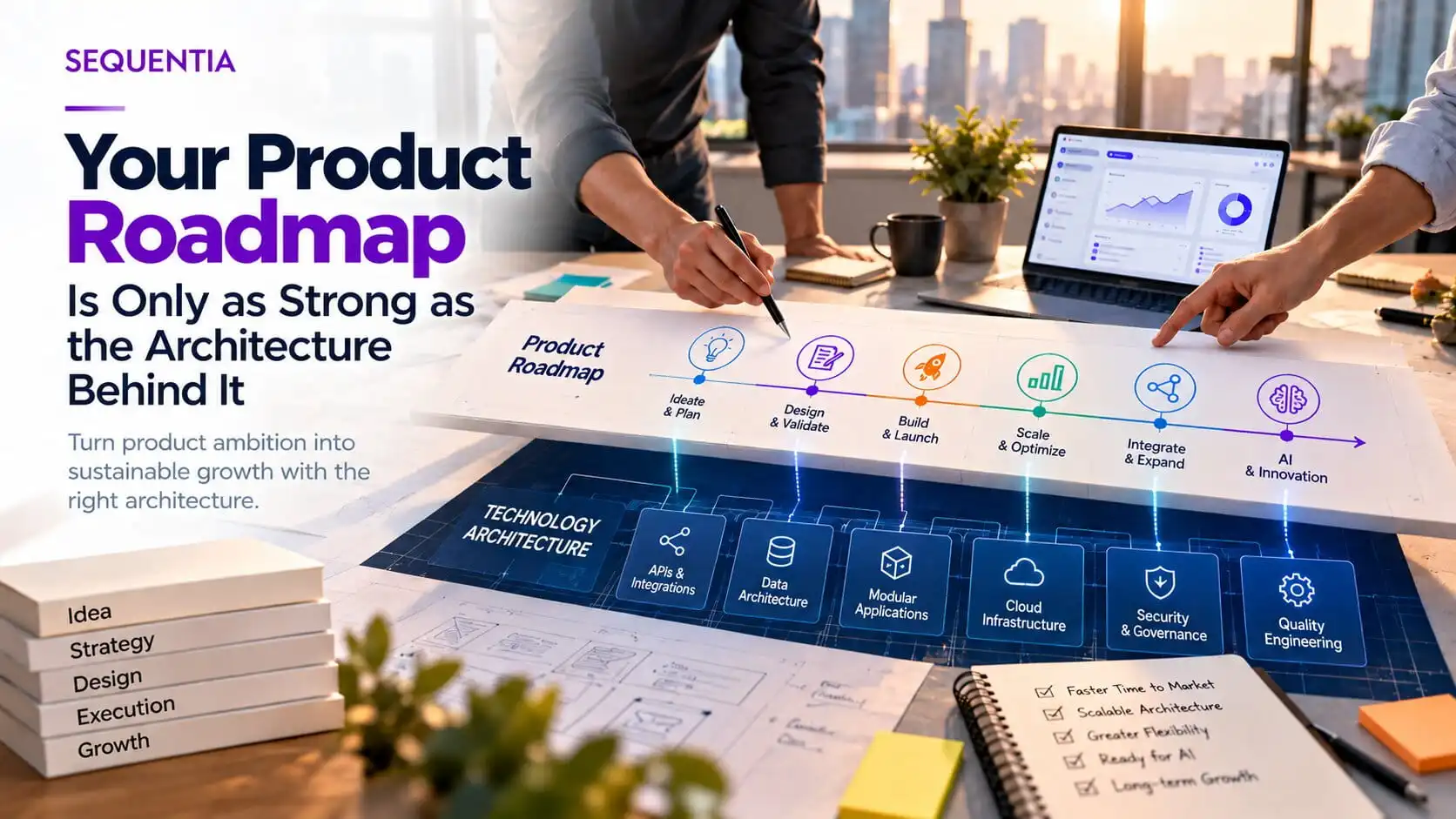
A typical roadmap looks like this:
-
Assessment and Prioritization – Identify which systems create the most value and which hold the business back.
-
Refactoring and Re-architecting – Gradually break down monolithic systems into microservices, starting with lower-risk modules.
-
API Enablement – Use APIs to connect legacy logic with modern interfaces, allowing old and new systems to work together.
-
Cloud Integration – Move specific workloads to the cloud for scalability and cost efficiency while maintaining hybrid operations where needed.
-
Continuous Testing and Validation – Monitor performance, security, and dependencies at every stage to ensure consistency.
This incremental method keeps systems online while progress happens in the background. It replaces the “big bang” modernization model with a safer, data-driven process that maintains continuity from start to finish.
A Real-World Example: Modernizing Without Disruption
One of our clients, a major financial services provider, faced a common challenge. Their core banking system handled millions of transactions per day, but it lacked integration with new digital channels like mobile apps and chatbots.
Replacing the entire system would have been financially and operationally impossible.
Instead, Sequentia introduced a phased transformation plan. Core systems continued running while new API layers were developed to connect customer-facing applications. Over time, non-critical components were refactored into cloud-based microservices.
The result was a modern, responsive experience for users without a single day of downtime.
This approach proved that transformation and continuity are not opposites. They are parallel goals that can be achieved together with the right architecture and mindset.
Designing for Reliability: Business Continuity at Every Step
For modernization to succeed, continuity cannot be treated as an afterthought. It must be built into every phase of the process.
At Sequentia, we use what we call resilient modernization. This means applying best practices that protect uptime, data integrity, and user trust throughout transformation.
That includes redundancy through parallel environments (commonly called blue-green deployments), real-time monitoring to detect issues before they cause outages, and rollback mechanisms that instantly restore previous versions if something goes wrong.
These design choices ensure that modernization doesn’t just deliver new capabilities — it also safeguards the foundation that keeps your business running.
The Human Element: Aligning Teams and Culture
Technology is only half of the transformation story. The other half is people.
Modernization fails when teams operate in silos or when strategy and execution are disconnected. Success depends on aligning everyone — from IT and operations to product and leadership — around a shared vision.
At Sequentia, we help organizations form cross-functional modernization teams that bring developers, QA, business analysts, and product managers together under one mission.
This collaborative culture breaks down the old tension between “keeping systems stable” and “pushing for innovation.” Everyone works toward a common goal: evolve continuously, but never at the cost of reliability.
When the culture supports collaboration and shared accountability, modernization becomes sustainable.
Automation and DevOps: The Modernization Accelerators
Modernization at scale requires consistency, speed, and safety — and that’s where automation and DevOps come in.
Automation eliminates human error and accelerates delivery. With continuous integration and continuous deployment (CI/CD), teams can push changes faster while maintaining quality.
DevOps bridges the long-standing gap between development and operations, creating a culture of shared ownership. It ensures that innovation doesn’t outpace stability.
Together, automation and DevOps create a feedback loop that supports continuous improvement — each update is deployed, tested, and refined seamlessly without interrupting core systems.
When modernization is automated, stability becomes built-in.
Security and Compliance: Building Trust Through Transformation
As systems evolve, security becomes more critical than ever. Every new API, integration, or microservice is a potential access point.
Enterprises must integrate security into their modernization processes from the beginning. This is where DevSecOps plays a vital role. By embedding security into CI/CD pipelines, organizations ensure that vulnerabilities are detected early rather than after deployment.
In regulated industries such as finance and healthcare, modernization must also comply with strict data privacy laws. At Sequentia, we help clients maintain compliance with frameworks such as GDPR, HIPAA, and SOC 2 — ensuring that innovation never compromises trust.
Security and innovation can and should move forward together.
Modernizing Data: The Missing Link
Modern applications are only as powerful as the data that drives them. Unfortunately, many enterprises overlook the need to modernize their data layer.
Legacy databases often trap information in silos, preventing integration, analytics, and automation.
Data modernization unlocks this potential. By adopting cloud-native databases, real-time analytics pipelines, and unified APIs, organizations gain visibility and agility.
At Sequentia, we often remind clients that application modernization and data modernization go hand in hand. Without accessible, reliable data, even the most advanced applications will fall short.
When data flows freely, innovation follows naturally.
The ROI of Balanced Transformation
Every modernization effort must ultimately justify its cost. While the investment can seem significant, the long-term returns far outweigh the expense.
When transformation is balanced, enterprises see measurable benefits:
-
Reduced maintenance and operational costs
-
Faster time-to-market for new products
-
Improved user satisfaction and retention
-
Greater scalability and system resilience
Equally important is the cost of doing nothing. Legacy systems accumulate technical debt that grows more expensive every year. Delaying modernization risks performance failures, security breaches, and lost competitiveness.
Balanced transformation is not just a technology decision, it is a strategic investment in the future.
The Sequentia Framework for Resilient Transformation
At Sequentia, our application transformation framework is designed to make modernization predictable, measurable, and secure.
It combines our expertise in Product Engineering, API-Driven Development, Quality Engineering, and Agile Delivery to ensure that innovation never comes at the expense of reliability.
Our process focuses on four guiding principles:
-
Assess deeply before acting - understand systems, dependencies, and goals.
-
Architect for evolution - design modular, API-first systems that can change without breaking.
-
Automate for speed and safety - use DevOps and CI/CD to deliver faster with confidence.
-
Assure quality continuously - embed testing and monitoring into every phase.
This framework turns what is often a risky undertaking into a controlled, data-backed process that delivers measurable outcomes.
Conclusion: Modernization as a Continuous Journey
Technology will never stand still. What is modern today will become legacy tomorrow.
That is why enterprises must treat application transformation as an ongoing discipline rather than a one-time project.
The most successful organizations don’t choose between innovation and stability - they combine them. They evolve constantly, but safely.
At Sequentia, we help enterprises modernize confidently, ensuring that transformation becomes a source of competitive strength rather than operational risk.
Because the future belongs to organizations that can move forward without losing their balance.
.webp)
Pune
Sequentia Software Solutions Pvt Ltd
401, Koyna, Mohan Nagar,
Baner, Pune, Maharashtra - 411045.
Jalgaon
Sequentia Software Solutions Pvt Ltd
06, Rambhau Joshi Market, Opposite Golani Market, Navi Peth, Jalgaon, Maharashtra - 425001.