Enterprise Modernization in Practice: Balancing Speed, Stability, and Scale
Why Enterprise Modernization Is Harder Than It Looks
Enterprise modernization is often discussed as if it were a technical upgrade. Replace legacy systems, migrate to the cloud, introduce new platforms, and everything will fall into place. In reality, modernization is far more complex. It touches every layer of the organization, from technology and data to people, processes, and decision-making structures.
Most enterprises already understand that modernization is necessary. Competitive pressure, customer expectations, regulatory demands, and operational inefficiencies make standing still impossible. Yet despite this awareness, modernization initiatives frequently stall, overrun budgets, or fail to deliver meaningful business impact.
The reason is not a lack of tools or frameworks. It is the difficulty of balancing three competing forces at once: speed, stability, and scale. Move too fast, and you destabilize critical operations. Move too cautiously, and innovation slows to a crawl. Focus only on short-term wins, and long-term scalability suffers.
At Sequentia, we see modernization succeed when organizations stop treating these forces as trade-offs and start designing systems and operating models that support all three simultaneously.
The False Trade-Off Between Speed and Stability
One of the most damaging myths in enterprise modernization is the belief that speed and stability are mutually exclusive. Leaders often assume that to modernize quickly, they must accept higher risk, or that to maintain stability, they must sacrifice momentum.
This framing leads to poor decisions. Some organizations push aggressive modernization timelines that overwhelm teams and introduce systemic risk. Others delay meaningful change indefinitely, protecting stability at the cost of relevance.
In practice, speed and stability are not opposites. They are outcomes of good design. Systems that are modular, observable, and well governed allow teams to move quickly without fear. Systems that are tightly coupled, poorly understood, and fragile force teams to slow down, regardless of how urgent the business need may be.
Modernization should not aim to trade stability for speed. It should aim to remove the structural constraints that make speed unsafe.
Why Big-Bang Modernization Fails
Many enterprises begin modernization with ambitious, large-scale plans. Replace the core system. Rewrite the platform. Consolidate everything into a single new solution. On paper, this approach promises clarity and finality.
In practice, it concentrates risk.
Large replacement initiatives take years to complete. During that time, business needs continue to evolve. Teams must support old systems while building new ones. Integration complexity increases. Stakeholder confidence erodes as timelines slip and costs rise.
Most importantly, big-bang modernization delays value. The organization invests heavily without seeing incremental benefits. When problems arise, rollback options are limited.
Successful modernization rarely looks dramatic. It is incremental, deliberate, and often unglamorous. It focuses on enabling change rather than delivering a single transformational event.
Modernization Starts With Business Capabilities, Not Systems
A common mistake in modernization is organizing work around systems instead of business capabilities. Enterprises map current systems, identify which ones are outdated, and plan replacements accordingly.
This approach misses a critical step. Systems exist to support capabilities. When modernization focuses on systems alone, it risks recreating old problems in new technology.
A capability-driven approach starts by asking what the business actually does. Order management, customer onboarding, pricing, claims processing, analytics, reporting, compliance. These capabilities cut across systems and evolve over time.
By aligning modernization efforts to capabilities, organizations can introduce clear ownership, define boundaries, and modernize incrementally behind stable interfaces. Systems become implementation details rather than anchors.
This shift allows modernization to deliver value faster while reducing risk.
APIs as the Backbone of Incremental Modernization
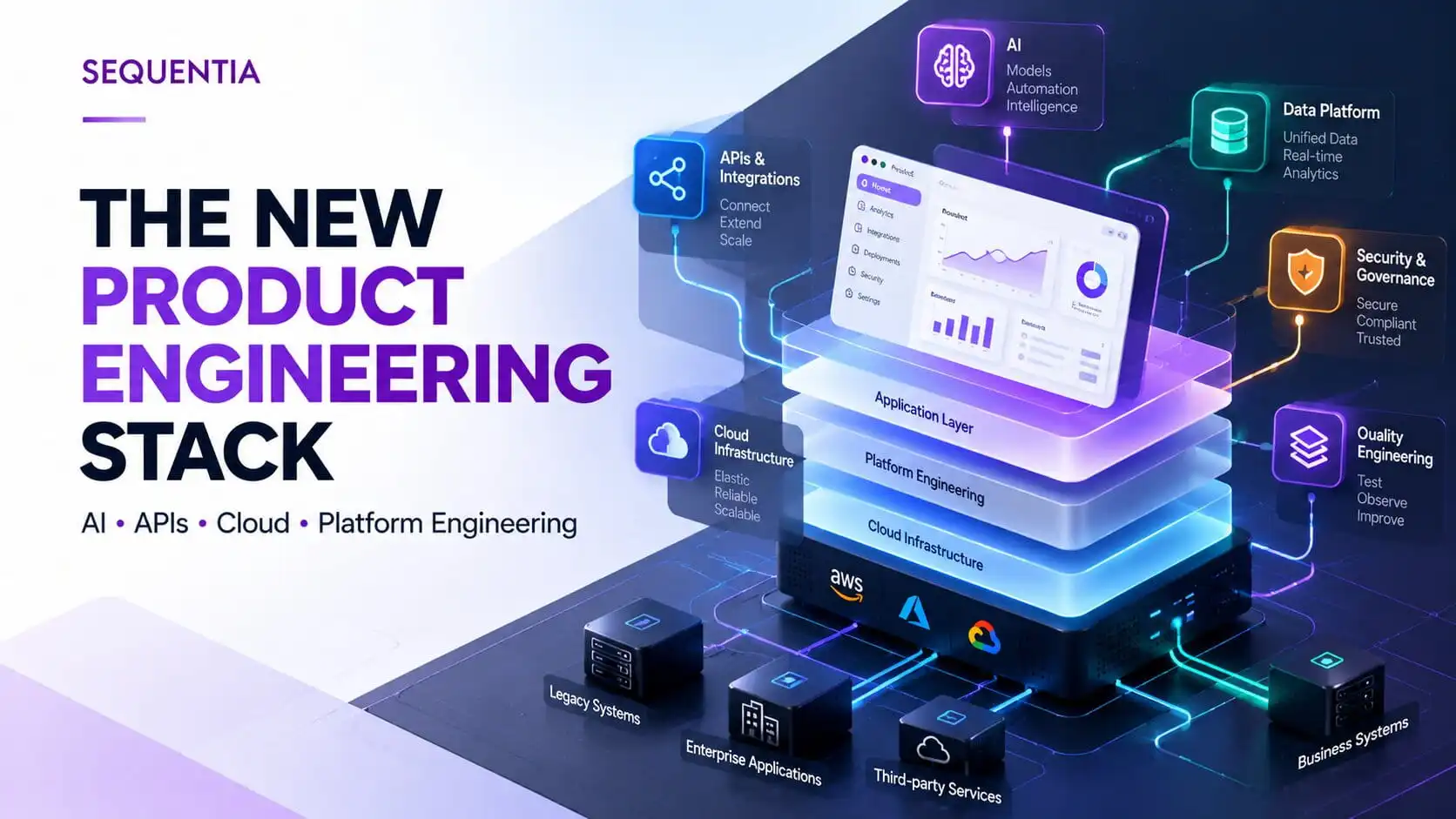
APIs play a central role in practical enterprise modernization. They create the separation needed to evolve systems independently.
In many legacy environments, integrations are tightly coupled. Changes in one system ripple unpredictably across others. Testing becomes complex. Releases become risky.
Introducing well-designed APIs allows enterprises to decouple legacy systems from new functionality. Existing systems continue operating, while new services are developed behind stable contracts. Over time, legacy components can be replaced without disrupting consumers.
APIs are not just integration mechanisms. They are architectural boundaries that enable controlled change. When designed thoughtfully, they allow modernization to proceed without requiring wholesale replacement.
Data Ownership as a Modernization Enabler
Data architecture is often the hidden constraint in modernization initiatives. Many enterprises rely on shared databases that serve multiple systems and teams. While this may have worked historically, it creates significant challenges during modernization.
Shared data models make change risky. Schema updates affect multiple consumers. Performance tuning becomes unpredictable. Responsibility for data quality is unclear.
Modernization efforts that ignore data ownership often stall. New services struggle to coexist with legacy data structures. Teams hesitate to make changes due to fear of unintended consequences.
Establishing clear data ownership aligned to business capabilities is essential. Each domain should control its data and expose it through well-defined interfaces. This clarity enables independent evolution and reduces coupling.
Quality Engineering as the Foundation of Stability
Stability during modernization does not come from freezing change. It comes from confidence in change.
Quality engineering provides that confidence. Automated testing, observability, performance validation, and resilience testing allow teams to understand system behavior before issues reach users.
Without strong quality practices, modernization introduces fear. Teams slow down. Releases are delayed. Risk tolerance drops.
With embedded quality engineering, modernization becomes predictable. Teams can deploy changes frequently, detect issues early, and respond quickly.
At Sequentia, we see quality engineering not as a phase, but as a continuous capability that supports both stability and speed.
Organizational Structure Shapes Modernization Outcomes
Technology alone does not determine modernization success. Organizational structure plays an equally important role.
When teams lack clear ownership, modernization initiatives struggle. Decisions become slow. Accountability is diffused. Architectural boundaries blur.
Effective modernization aligns team structure with system structure. Teams own capabilities, not just codebases. Decision rights are clear. Governance provides guardrails without blocking progress.
This alignment reduces friction and allows modernization to scale across the organization.
Scaling Modernization Across the Enterprise
Modernization often starts in isolated areas. A pilot project. A single department. A specific system. Scaling beyond these pockets is where many initiatives fail.
To scale modernization, enterprises must standardize principles rather than solutions. Architectural guidelines, API standards, quality practices, and governance models should be consistent, while implementation details remain flexible.
This approach allows different teams to modernize at different speeds while maintaining coherence. It prevents fragmentation and ensures that modernization efforts contribute to a unified enterprise architecture.
Measuring Progress Beyond Delivery Metrics
Traditional metrics such as release counts or system replacements provide limited insight into modernization success. More meaningful indicators focus on adaptability and resilience.
Can teams make changes without fear?
Do deployments happen predictably?
Are integrations stable?
Is onboarding new teams faster?
Does the system support new business models without major rework?
These signals reflect whether modernization is actually improving the organization’s ability to evolve.
The Role of Leadership in Modernization
Enterprise modernization is as much a leadership challenge as a technical one. Leaders set the tone for how change is approached, how risk is managed, and how success is defined.
When leaders prioritize short-term delivery over structural health, modernization suffers. When they support incremental progress, invest in foundations, and accept temporary complexity, modernization thrives.
Leadership must also recognize that modernization is never finished. It is an ongoing discipline that evolves with the business.
How Sequentia Approaches Enterprise Modernization
At Sequentia, we approach modernization as a continuous capability rather than a one-time project. Our focus is on enabling enterprises to change safely, repeatedly, and at scale.
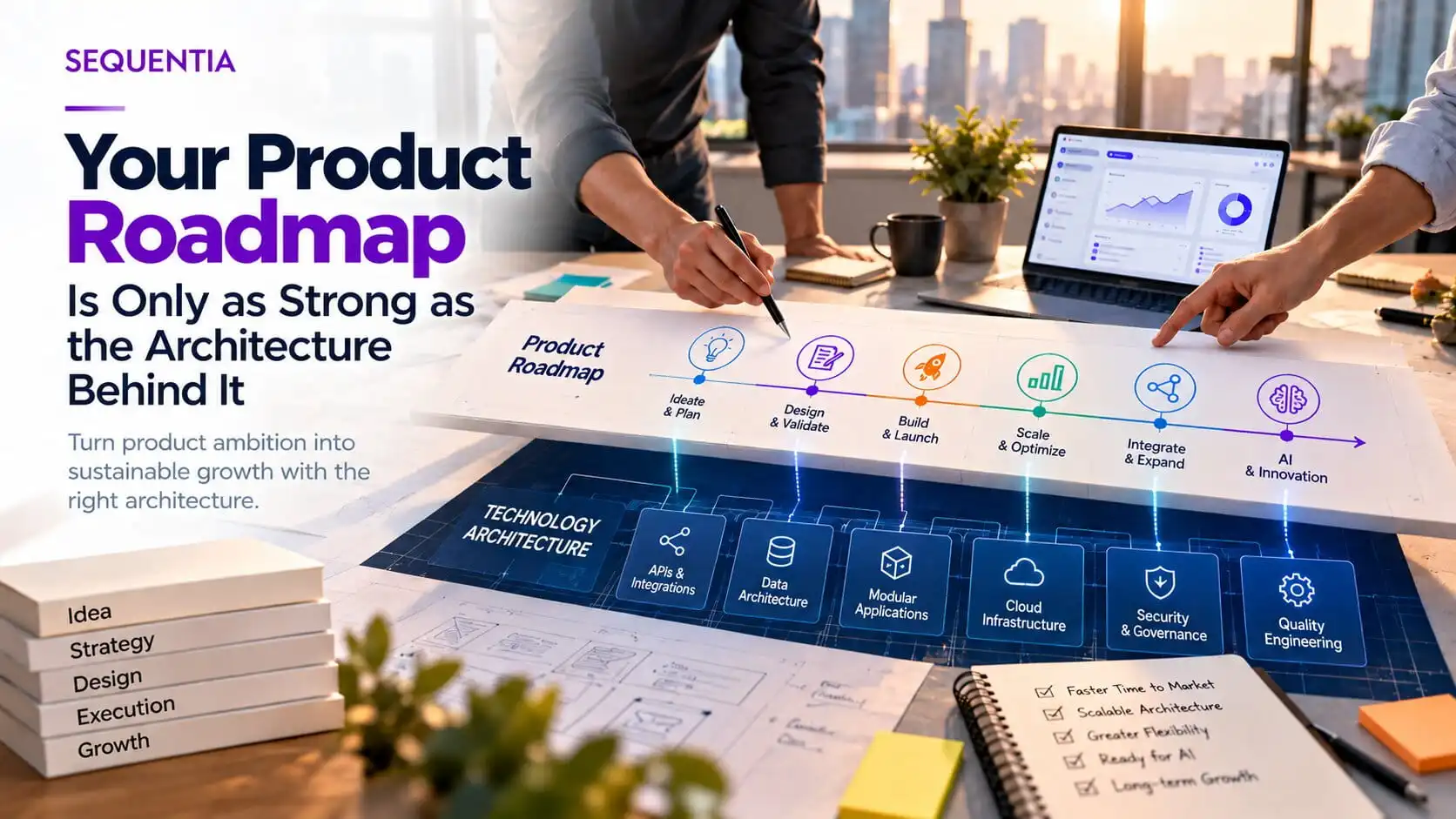
We work with organizations to define capability boundaries, introduce API-first architectures, establish data ownership, embed quality engineering, and align teams with systems. The goal is not just modern technology, but a modern way of evolving technology.
Modernization succeeds when it becomes part of how the organization operates, not something it periodically attempts.
Modernization Is About Designing for Change
Enterprise modernization is not about chasing the latest technology or executing large replacement programs. It is about designing systems and organizations that can adapt continuously.
Balancing speed, stability, and scale is not a trade-off. It is a design challenge. When enterprises address it deliberately, modernization stops being disruptive and starts becoming routine.
The organizations that succeed are not the ones that modernize fastest, but the ones that modernize most thoughtfully.
.webp)
Pune
Sequentia Software Solutions Pvt Ltd
401, Koyna, Mohan Nagar,
Baner, Pune, Maharashtra - 411045.
Jalgaon
Sequentia Software Solutions Pvt Ltd
06, Rambhau Joshi Market, Opposite Golani Market, Navi Peth, Jalgaon, Maharashtra - 425001.