Platform Thinking in the Enterprise: How Organizations Are Rebuilding Digital Cores
For years, enterprise technology evolved through projects. A system was introduced to solve a problem. Another was added to support growth. Integrations followed. Over time, a digital estate emerged that technically worked but was never designed to function as a coherent whole.
This approach was sustainable when change was slow and expectations were predictable. It no longer is.
Enterprises today face constant pressure to evolve. New customer experiences, regulatory requirements, AI adoption, ecosystem integration, and operational resilience all demand systems that can adapt continuously. In this environment, project-based thinking breaks down. Each new initiative adds complexity rather than capability.
This is why platform thinking has become central to modern enterprise transformation.
Platform thinking is not about technology stacks or cloud migration alone. It is about rebuilding the digital core so that systems enable change instead of resisting it. At Sequentia, we see platform thinking as a shift in mindset that determines whether enterprises can scale, innovate, and remain resilient over the next decade.
Why Project-Centric Models Are Failing Enterprises
Project-based delivery focuses on outcomes within defined boundaries. Deliver a system. Meet a deadline. Close the project. Move on.
This model optimizes for completion, not continuity.
Over time, enterprises accumulate systems that were never designed to work together. Each project introduces its own architecture, data assumptions, integration patterns, and operational practices. The result is a fragmented digital core that becomes increasingly expensive to change.
When change is required, teams discover that no single system can evolve independently. Dependencies are everywhere. Decisions ripple unpredictably. Delivery slows despite increased investment.
Platform thinking emerges as a response to this reality. It prioritizes long-term capability over short-term completion.
What Platform Thinking Actually Means
Platform thinking treats shared capabilities as products in their own right. These capabilities provide consistent services to multiple consumers across the organization. They are designed for reuse, reliability, and evolution.
A platform is not a monolith. It is a collection of well-defined services, data domains, and interfaces that enable teams to build without reinventing foundational components.
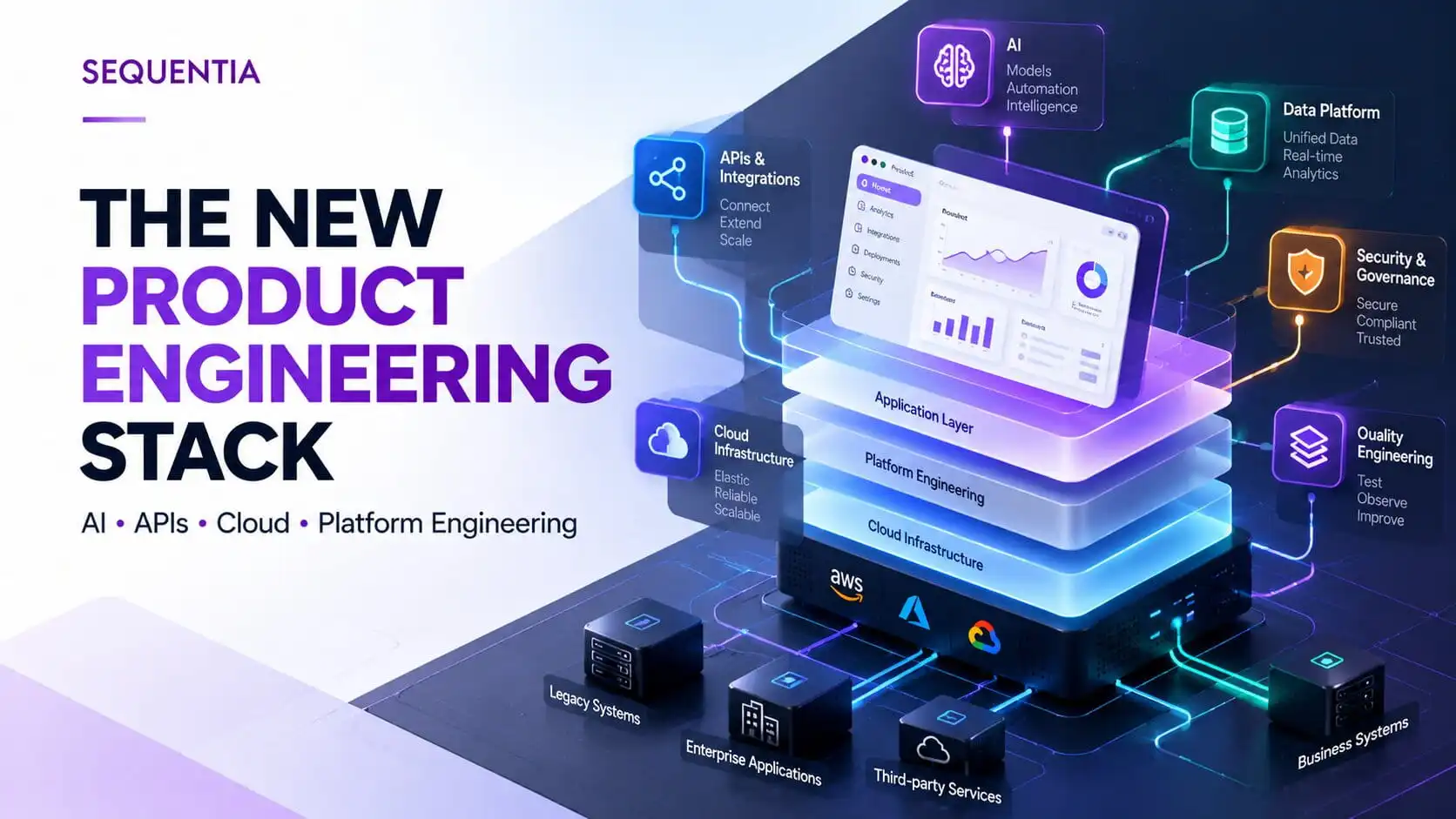
Examples include identity and access, payments, data ingestion, analytics, workflow orchestration, and integration layers. When these capabilities are treated as platforms, teams can focus on delivering value rather than rebuilding infrastructure repeatedly.
Platform thinking changes how success is measured. Instead of asking whether a project delivered on time, organizations ask whether the platform made future delivery easier.
The Digital Core as a Strategic Asset
In enterprises that embrace platform thinking, the digital core becomes a strategic asset rather than a constraint.
The digital core includes systems of record, integration layers, data platforms, and shared services that underpin business operations. When these components are modular, well-governed, and adaptable, the organization gains leverage.
New products can be launched faster. Partners can be onboarded more easily. Regulatory changes can be absorbed without disruption. AI initiatives can build on stable data and integration foundations.
When the digital core is fragmented, every change becomes a negotiation. Platform thinking aims to reverse this dynamic.
APIs as the Foundation of Platform Thinking
APIs play a central role in platform-oriented enterprises.
They define how capabilities are consumed. They create boundaries that protect internal evolution. They allow teams to work independently while remaining aligned.
In platform thinking, APIs are not afterthoughts. They are first-class artifacts. They are designed with clarity, versioned deliberately, and governed consistently.
Poor API discipline undermines platform strategy. When APIs expose internal details or change unpredictably, consumers lose trust. Integration becomes fragile. Platform benefits disappear.
Enterprises that succeed with platform thinking invest heavily in API strategy because they understand that APIs are the contracts that hold platforms together.
Data Platforms Enable Scalable Intelligence
As enterprises adopt AI and advanced analytics, data platforms become critical components of the digital core.
Platform thinking treats data as a shared but governed asset. Data domains are owned by specific teams. Access is provided through defined interfaces. Quality and lineage are actively managed.
This approach enables multiple consumers to leverage data safely without creating tight coupling. AI models can evolve independently. Reporting remains consistent. Compliance requirements are easier to meet.
Without platform-oriented data architecture, AI initiatives struggle to scale. Each use case becomes a bespoke effort. Trust erodes. Value diminishes.
Organizational Alignment Is Essential
Platform thinking is not purely technical. It requires organizational alignment.
Platform teams must have clear ownership and long-term accountability. Their success should be measured by adoption, reliability, and enablement, not just delivery milestones.
Product teams must trust platforms and resist the temptation to build their own alternatives. Leadership must reinforce this behavior through incentives and governance.
When organizations fail to align structure with platform strategy, platforms become underutilized. Teams bypass shared capabilities to meet immediate needs, recreating fragmentation.
Sustainable platform thinking depends on consistent leadership reinforcement.
Balancing Autonomy and Standardization
One of the biggest challenges in platform thinking is balancing team autonomy with enterprise standards.
Too much standardization stifles innovation. Too little creates chaos.
Effective platforms provide guardrails rather than constraints. They define what must be consistent while allowing flexibility in implementation. They reduce cognitive load without dictating every decision.
This balance is critical for scaling product engineering. Teams should be free to innovate within clear boundaries. Platforms exist to make that freedom safe.
Why Platform Thinking Accelerates Delivery Over Time
Platform thinking often feels slower at the beginning. Building shared capabilities takes time. Early projects may feel delayed as teams invest in foundations.
Over time, the return becomes clear.
Delivery accelerates because teams reuse proven components. Integration effort decreases. Quality improves. Risk declines. Teams spend less time coordinating and more time delivering value.
Enterprises that commit to platform thinking early outperform those that continue layering projects on fragile cores.
Common Pitfalls in Platform Adoption
Many platform initiatives fail because they are treated as side projects.
Platforms require sustained investment. They require governance. They require leadership attention. When platforms are underfunded or deprioritized, they degrade quickly.
Another common pitfall is overengineering. Platforms should solve real problems, not hypothetical ones. Starting small and evolving based on usage is more effective than designing everything upfront.
Platform thinking succeeds when platforms are treated as evolving products rather than static infrastructure.
Sequentia’s Approach to Platform Transformation
At Sequentia, we help enterprises transition from project-centric delivery to platform-oriented digital cores.
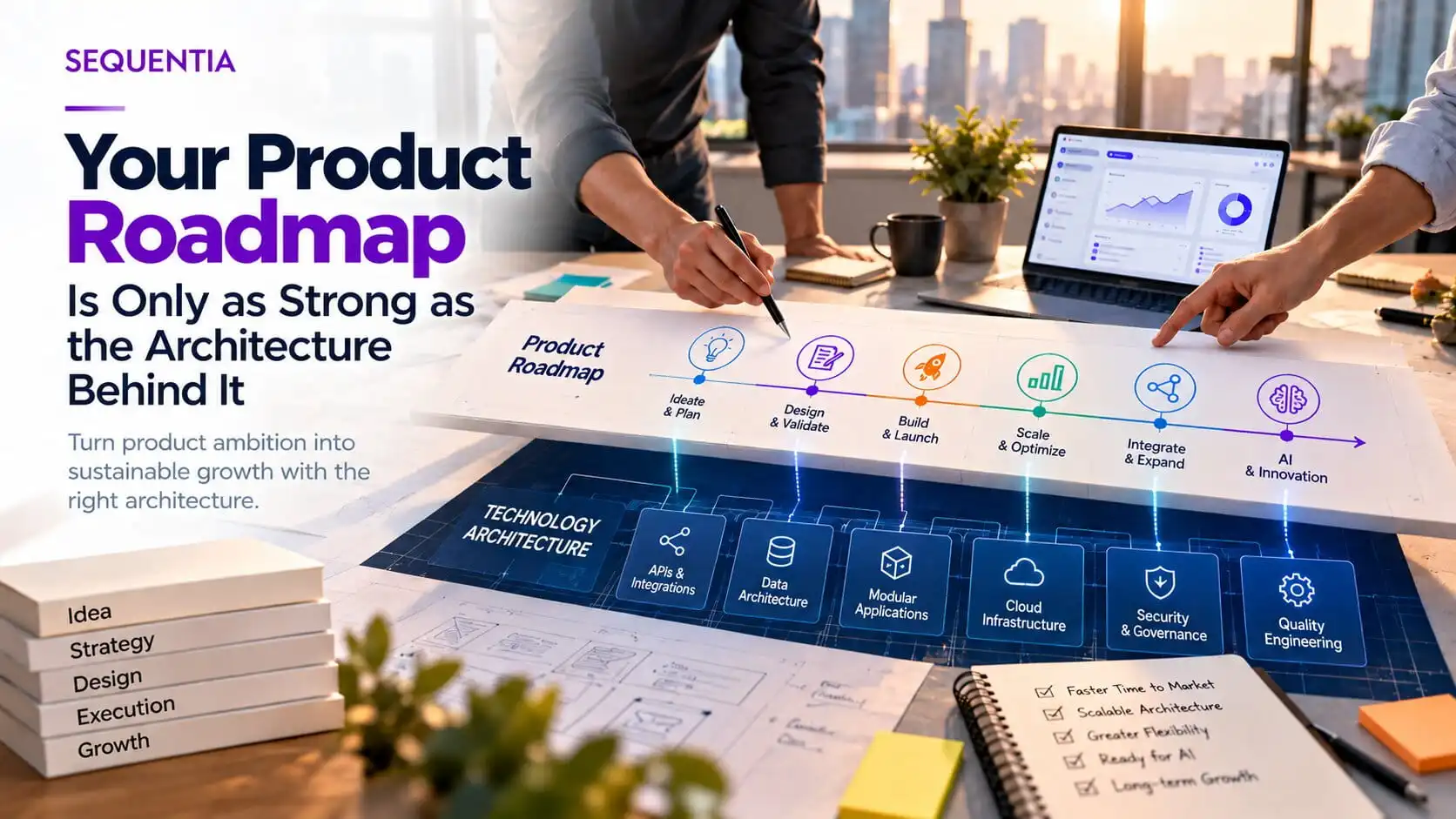
Our approach focuses on identifying high-impact shared capabilities, designing modular architectures, establishing API and data governance, and aligning organizational structures with platform ownership.
We emphasize incremental progress. Platform thinking does not require a full rebuild. It requires deliberate shifts in how systems are designed and evolved.
Enterprises that adopt this mindset gain long-term adaptability without sacrificing short-term delivery.
Platforms Are the Future of Enterprise Systems
The future of enterprise technology belongs to organizations that can change continuously without breaking.
Platform thinking provides the structure needed to support that change. It transforms the digital core from a liability into an enabler.
Enterprises that rebuild around platforms move faster, scale better, and adapt more confidently. Those that remain project-centric struggle under increasing complexity.
Platform thinking is not a trend. It is a response to reality.
.webp)
Pune
Sequentia Software Solutions Pvt Ltd
401, Koyna, Mohan Nagar,
Baner, Pune, Maharashtra - 411045.
Jalgaon
Sequentia Software Solutions Pvt Ltd
06, Rambhau Joshi Market, Opposite Golani Market, Navi Peth, Jalgaon, Maharashtra - 425001.