Why Scalability Is a Design Decision, Not an Infrastructure Problem
Introduction: The Scalability Narrative We Get Wrong
Scalability discussions inside enterprises almost always begin with infrastructure. Conversations revolve around cloud capacity, server upgrades, performance limits, and costs. While these factors matter, they are rarely the true reason systems struggle to scale.
In most organizations, scalability issues appear long before infrastructure limits are reached. They begin with architectural and product design decisions made early in the life of a system. Decisions that seemed harmless when scale was small become constraints when complexity grows.
At Sequentia, across product engineering and enterprise modernization engagements, we see the same pattern repeat. Systems do not break because infrastructure cannot handle demand. They break because design choices limit how safely the system can evolve.
Understanding scalability as a design discipline rather than an infrastructure concern is essential for building digital systems that grow with the business.
Redefining Scalability in Modern Digital Systems
Scalability is often described as the ability to support increasing user volumes or transaction loads. That definition is incomplete.
In modern enterprises, scalability also means the ability to absorb change without introducing instability. It means adding features without disrupting existing workflows. It means integrating new platforms while maintaining reliability. It means allowing teams to scale without stepping on each other.
A system that performs well under load but resists change is not scalable in any meaningful way. True scalability is about adaptability across time, not just strength at a specific moment.
Why Infrastructure-First Thinking Misses the Core Issue
Infrastructure is a powerful enabler, but when used as the primary response to scaling problems, it hides deeper issues.
Organizations add capacity to solve performance bottlenecks, duplicate environments to manage instability, and spend more to keep fragile systems alive. These steps stabilize operations temporarily, but they do not improve how systems respond to growth or complexity.
The root causes are almost always structural. Tight coupling between components, shared ownership of data, unclear boundaries, and accumulated design shortcuts make systems rigid. As the system grows, every change carries risk.
Infrastructure can support scale. It cannot correct poor design.
Design as the Foundation of Scalability
Scalable systems are designed with the assumption that change is inevitable. They focus on isolating change rather than preventing it.
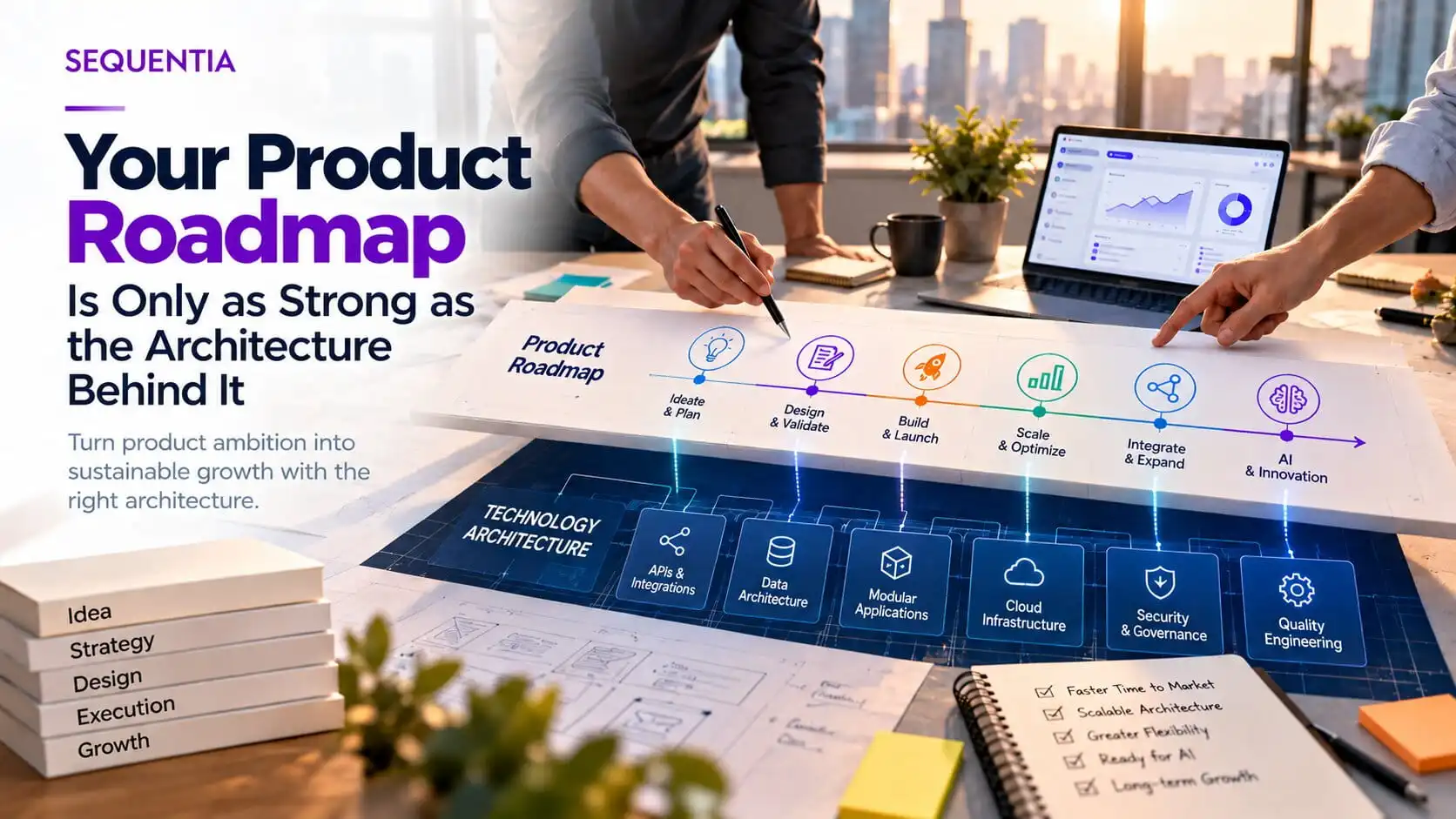
This starts with intentional boundaries. Each part of the system has a clear responsibility and a defined relationship with the rest of the platform. When boundaries are strong, growth affects only the areas designed to change.
This approach is central to Sequentia’s Product Engineering philosophy, where systems are built to evolve alongside business needs rather than resisting them. Design clarity becomes a long-term investment that pays dividends as complexity increases.
Why Modularity Enables Sustainable Growth
Modularity is one of the most effective ways to achieve scalability by design.
In modular systems, large applications are decomposed into smaller components aligned to business capabilities. Each component owns its logic, data, and behavior. Communication happens through defined interfaces, not shared assumptions.
This structure allows development teams to move independently, reduces unintended side effects, and simplifies testing and deployment. Growth introduces new modules instead of expanding existing complexity.
Without modularity, systems grow dense and fragile. Every new requirement increases coupling and risk. Over time, change becomes expensive and dangerous.
API Design as a Strategic Choice
APIs are often treated as integration tools added after systems are built. In scalable systems, APIs are designed first and treated as long-term contracts.
A well-designed API defines how a capability can be consumed without exposing internal complexity. This allows teams to change internal implementations while preserving stability for consumers.
Poor API design recreates tight coupling and limits future change. Good API design enables modernization without disruption.
This principle plays a critical role in Sequentia’s Enterprise Modernization approach, where APIs are used to decouple legacy systems from new platforms, allowing transformation to happen incrementally rather than through risky replacements.
(See: https://sequentia.in/services/enterprise-modernization)
Data Ownership and Its Impact on Scalability
Data architecture often becomes a silent scalability constraint.
When multiple components share databases without clear ownership, system evolution slows. Changes impact unexpected areas. Performance tuning becomes unpredictable. Testing becomes complex.
Scalable systems establish clear data boundaries. Each module owns its data, and access happens through defined interfaces rather than shared tables. This improves isolation and allows independent scaling.
Without disciplined data design, even modular systems struggle to maintain agility as they grow.
The Organizational Reflection of System Design
Systems mirror the organizations that build them.
When teams lack ownership clarity, systems develop overlapping responsibilities. When decision-making is fragmented, architecture loses coherence. When standards are inconsistent, complexity grows unchecked.
Scalable system design requires scalable organizational structures. Teams should own clearly defined capabilities. Architectural governance should guide decisions without slowing delivery.
Enterprise modernization initiatives succeed when technology strategy and organizational structure evolve together, not in isolation.
Why Scalability Cannot Be an Afterthought
Many organizations attempt to retrofit scalability once growth exposes weaknesses. By then, foundational design choices are deeply embedded.
Designing for scalability does not mean overengineering from day one. It means making deliberate decisions about boundaries, ownership, and evolution paths early, even when scale is still modest.
These early decisions shape everything that follows. Correcting them later is far more expensive and disruptive.
Quality Engineering as a Scaling Multiplier
As systems grow, confidence becomes as important as capability.
Quality engineering enables confidence through automated testing, observability, performance monitoring, and predictable behavior. These practices allow teams to scale development velocity without amplifying risk.
Without embedded quality, scale magnifies defects. With it, scale amplifies learning and improvement.
This is why Sequentia treats quality engineering as foundational across both product engineering and enterprise modernization initiatives.
Scalability Is Ultimately a Cultural Discipline
Design decisions reflect values.
Organizations that prioritize short-term delivery over long-term clarity create systems that struggle to scale. Organizations that value simplicity, responsibility, and deliberate design create systems that adapt over time.
Leadership plays a key role in reinforcing these values. When leaders support thoughtful design decisions, scalability becomes part of how teams think, not just something they react to.
Infrastructure in the Right Context
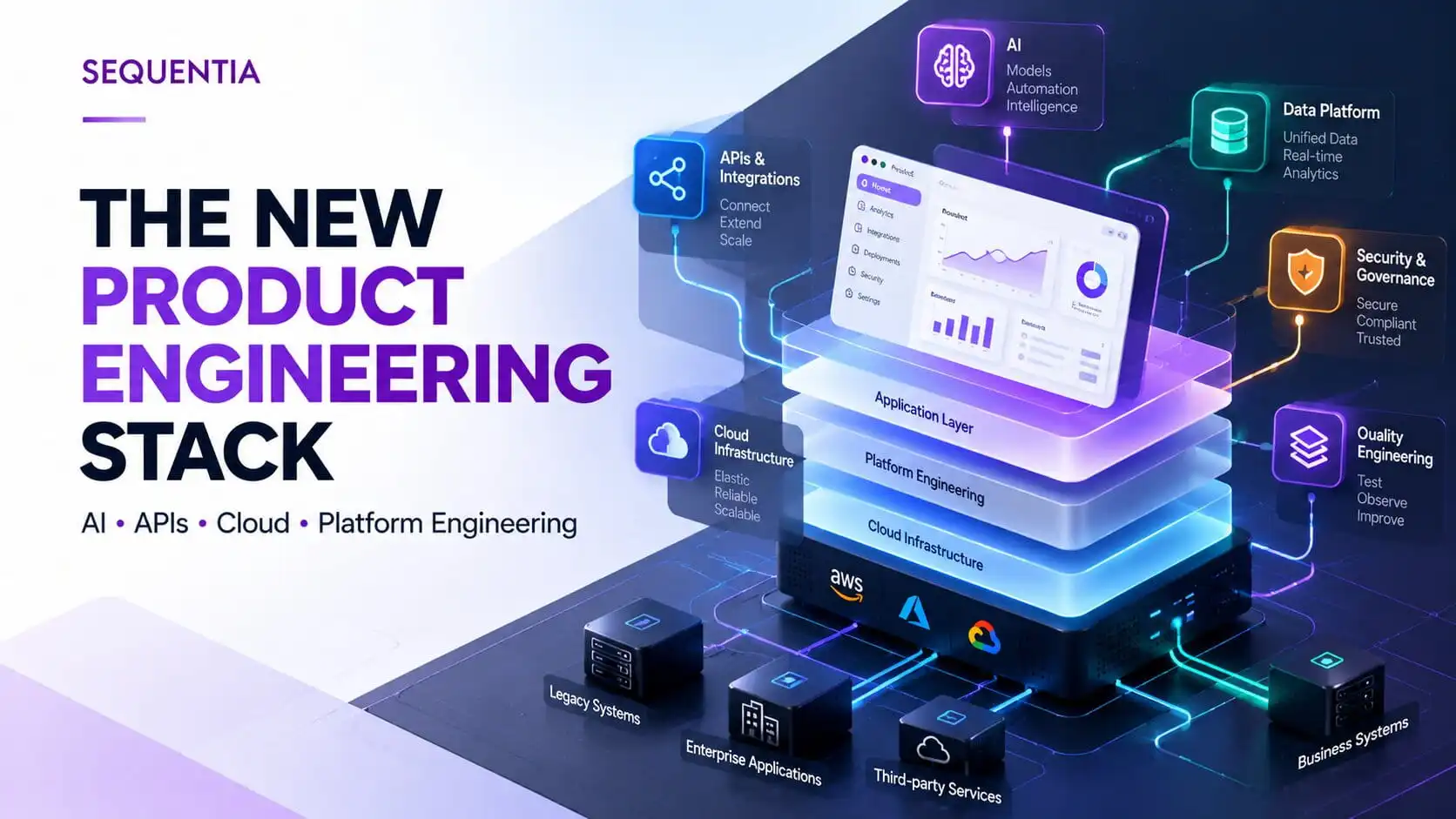
Infrastructure remains critical. Cloud platforms, automation, and elastic capacity provide powerful tools for growth. But their effectiveness depends on the systems built on top of them.
When design is intentional, infrastructure amplifies growth. When design is weak, infrastructure only delays failure.
Scalability succeeds when design leads and infrastructure follows.
Conclusion: Designing for Growth That Lasts
Scalability challenges rarely appear overnight. They emerge gradually as systems grow more complex.
Organizations that treat scalability as an infrastructure problem spend more to move slower. Organizations that treat scalability as a design decision build systems that grow with confidence.
At Sequentia, we believe scalable systems are created through deliberate product engineering and pragmatic enterprise modernization. Not through shortcuts, and not through infrastructure alone.
Design is where scalability begins. Everything else supports it.
.webp)
Pune
Sequentia Software Solutions Pvt Ltd
401, Koyna, Mohan Nagar,
Baner, Pune, Maharashtra - 411045.
Jalgaon
Sequentia Software Solutions Pvt Ltd
06, Rambhau Joshi Market, Opposite Golani Market, Navi Peth, Jalgaon, Maharashtra - 425001.