Architecture Debt Is Becoming an AI Adoption Constraint
AI adoption is accelerating across enterprise technology environments, but the conversation is increasingly moving beyond models, copilots and AI platforms.
A more fundamental question is emerging: is the architecture underneath the organization ready to support intelligent applications at scale?
Many enterprises have accumulated years of technology decisions. Applications have been added as business requirements evolved. Databases have multiplied. Integrations have grown around critical systems. Business logic has moved between applications, services and custom workflows. Infrastructure has evolved from on-premise environments to cloud and hybrid architectures.
Each individual decision may have been reasonable at the time.
The accumulated result can become architecture debt.
Architecture debt does not necessarily prevent an organization from operating its existing business. It becomes particularly visible when the organization wants to introduce something fundamentally different.
AI is one of those changes.
AI Is Exposing Architectural Constraints
A modern AI capability rarely operates in isolation.
An intelligent application may need customer information from a CRM, transaction data from an ERP, documents from a content platform, operational information from internal applications and real-time information from APIs.
It may then need to apply business rules, interact with users, trigger workflows and return information through web or mobile applications.
The AI model is only one component within that environment.
If the surrounding systems are difficult to connect, the AI implementation inherits that complexity.
This is why organizations sometimes discover that an apparently straightforward AI initiative requires substantial work in application integration, data engineering, API development, identity management, security and infrastructure.
The challenge is not necessarily the intelligence layer.
It is the technology environment that the intelligence layer needs to operate within.
The Problem Is Often Integration, Not AI
Enterprise applications rarely exist as isolated systems.
A typical environment can contain ERP platforms, CRM systems, custom applications, SaaS platforms, databases, third-party services and internal APIs. Over time, these systems can become connected through tightly coupled integrations that are difficult to change independently.
AI introduces another demand on this environment.
Applications need to expose the right information and capabilities to intelligent services in a controlled and reliable way.
This makes API architecture increasingly important.
Well-designed APIs can provide a controlled interface between modern applications, AI services and existing enterprise systems without requiring every new capability to understand the internal implementation of every legacy application.
That does not mean APIs automatically solve modernization challenges.
The underlying data models, business rules, security requirements and integration architecture still matter.
But a well-designed API layer can become an important part of creating architectural flexibility.
Data Accessibility Determines More Than AI Readiness
AI initiatives frequently bring attention to data quality.
Architecture adds another dimension: data accessibility.
An organization can have significant amounts of valuable information and still struggle to use it effectively if that information is fragmented across systems, difficult to access or dependent on manual processes.
The question is not simply whether the data exists.
It is whether applications can access the right data, in the right context, with appropriate controls and predictable performance.
This is particularly important when AI becomes part of operational workflows.
A customer-facing AI application may need current customer information. A service application may need historical records. An enterprise assistant may need information across multiple business systems.
The architecture has to make those interactions possible without compromising security or operational reliability.
Legacy Business Logic Can Become a Hidden Constraint
One of the more difficult modernization challenges is business logic embedded deeply inside older applications.
These systems may contain decades of accumulated business rules. They may be critical to operations and difficult to replace without significant business risk.
Simply replacing them because they are old is rarely a sufficient modernization strategy.
A more practical approach can be to progressively expose capabilities around them.
This may involve introducing APIs, separating selected services, modernizing surrounding applications or creating new digital experiences that interact with established systems through controlled interfaces.
This approach allows organizations to modernize incrementally while protecting the business processes that continue to work.
The objective is not to make every component new.
The objective is to make the overall architecture more adaptable.
Modernization Does Not Always Mean Replacement
Enterprise modernization is sometimes presented as a choice between keeping legacy technology and completely replacing it.
Real technology environments are rarely that simple.
A more sustainable modernization strategy can involve several approaches operating together.
Some applications may be transformed. Some services may be re-engineered. Some systems may remain stable while new APIs are introduced around them. Certain workloads may move to cloud infrastructure while others continue operating in existing environments.
The architecture becomes a portfolio of evolving capabilities rather than a single replacement project.
This becomes particularly valuable when AI initiatives need to move faster than a complete legacy transformation program.
An organization should not necessarily have to wait years for every legacy system to be replaced before introducing useful intelligent capabilities.
Instead, modernization can create the technical pathways that allow new capabilities to coexist with existing systems.
Architecture Flexibility Matters More Than Technology Replacement
The real measure of modernization is not how many legacy systems have been removed.
It is how easily the organization can respond to the next significant technology or business requirement.
Can a new application consume enterprise capabilities without creating another point-to-point integration?
Can data be accessed securely without rebuilding an entire application?
Can an AI service be replaced without redesigning the complete product?
Can infrastructure scale independently from application components?
Can teams release changes without creating unexpected dependencies across unrelated systems?
These are architectural questions.
And they increasingly influence how quickly organizations can adopt new technology.
AI Makes Architecture Strategy More Important
AI is likely to continue evolving rapidly.
Models will change. AI services will change. Application patterns will change. New agentic and intelligent workflows will emerge.
This makes it difficult to build an architecture around a single AI technology.
A more resilient approach is to build the surrounding engineering environment so that AI capabilities can evolve independently.
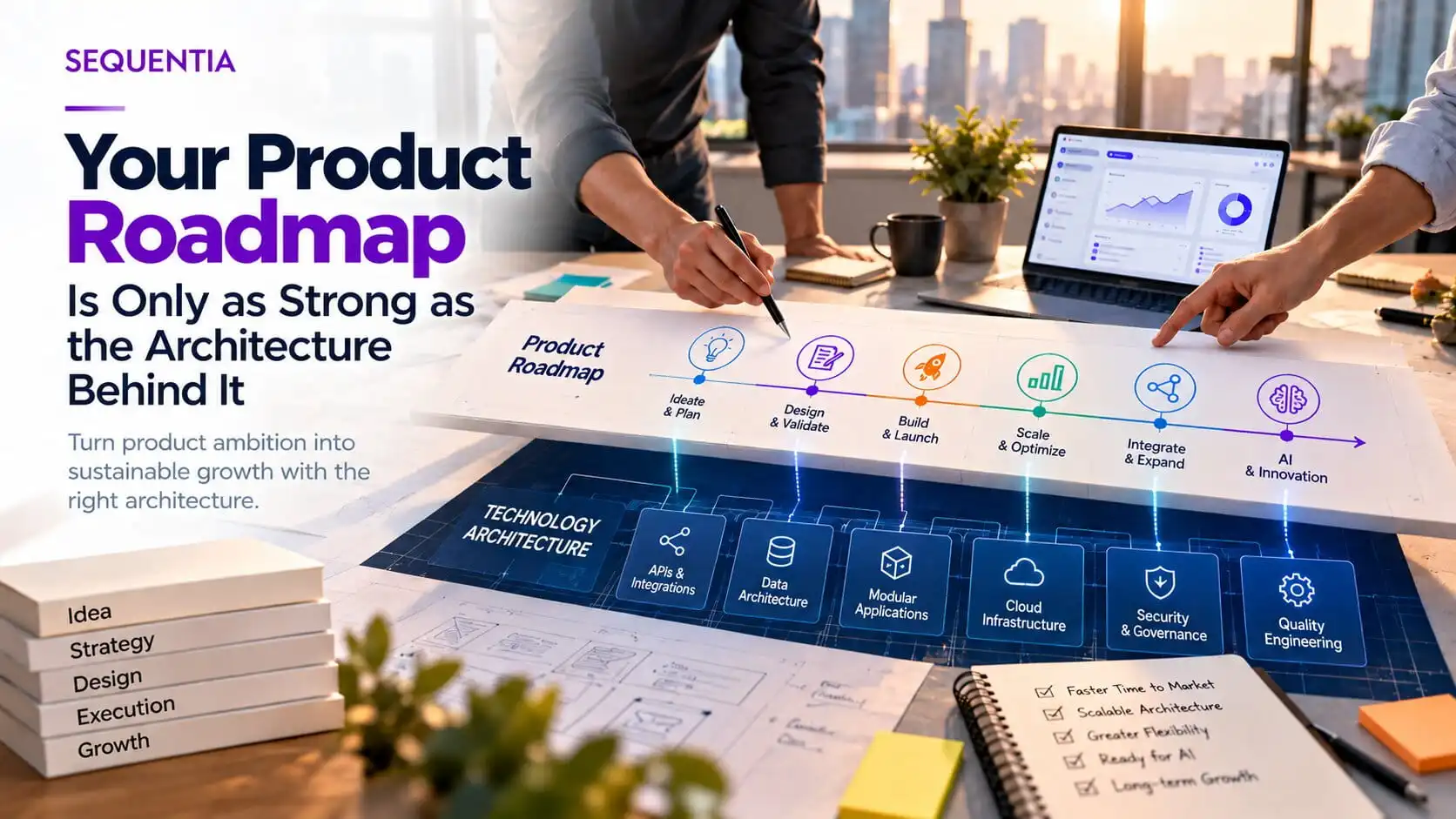
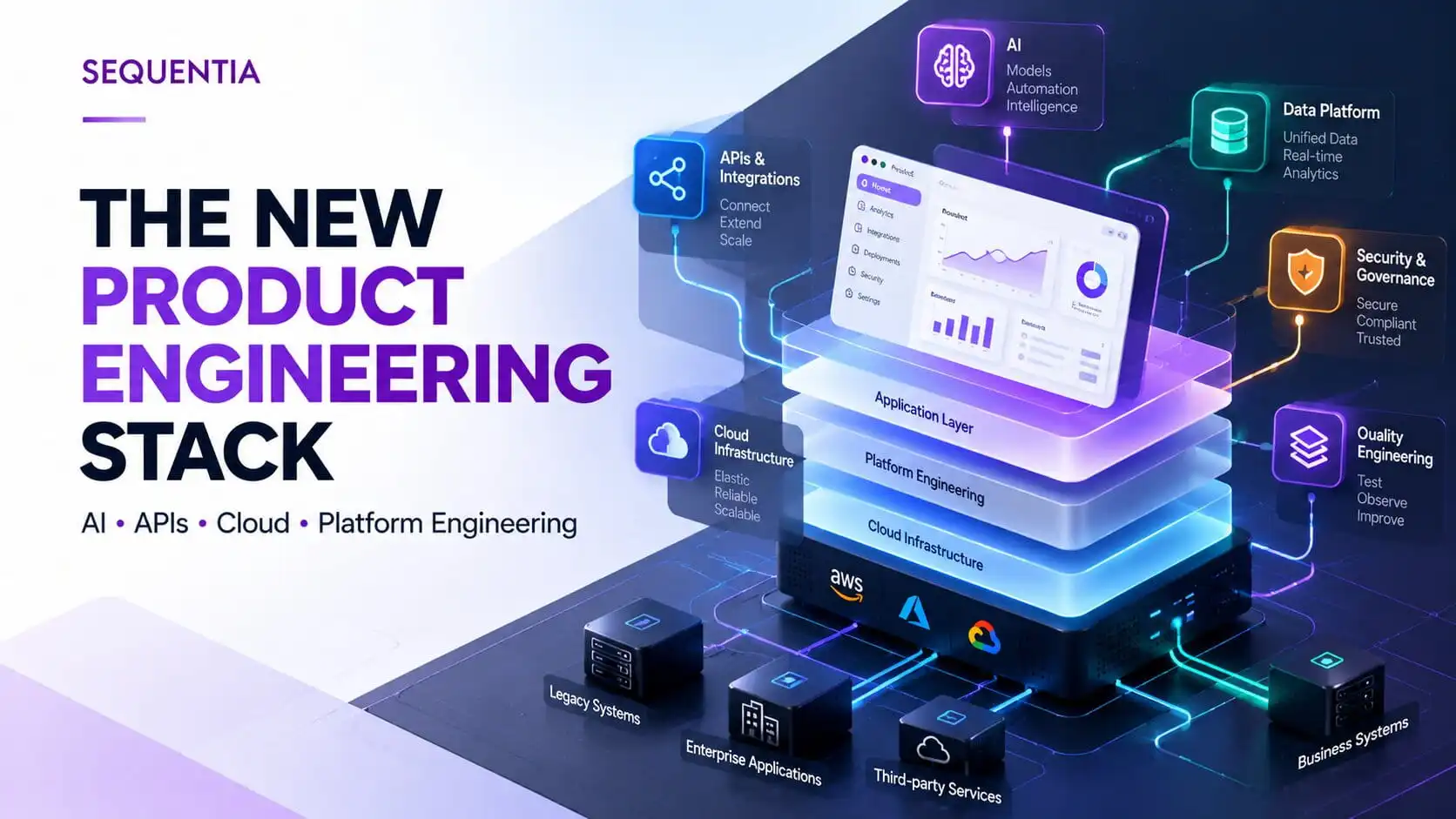
That means thinking about application architecture, APIs, data, security, infrastructure, observability and quality engineering as part of the AI strategy.
The organization should be able to change the intelligence layer without destabilizing the entire technology landscape.
This is where architecture becomes a strategic capability rather than simply a technical concern.
Building an Architecture That Can Evolve
AI adoption does not necessarily require an organization to abandon everything it already has.
It requires a clearer understanding of where existing architecture creates friction and where targeted modernization can create flexibility.
For some organizations, that may mean improving API architecture.
For others, it may mean transforming a critical application, restructuring data access, modernizing infrastructure or separating tightly coupled services.
In larger environments, it may require an architectural roadmap that connects product engineering, application transformation and enterprise modernization over multiple stages.
The important distinction is between adding another technology and creating an environment that can continuously absorb new technology.
That is the real architectural challenge.
AI is making architecture debt more visible because intelligent applications depend on connections across data, applications, infrastructure and business processes.
The organizations that can create those connections without continuously increasing complexity will have a much stronger foundation for the next generation of digital products and enterprise systems.
AI can introduce new intelligence into an organization. Modern architecture creates the environment in which that intelligence can actually operate.
.webp)
Pune
Sequentia Software Solutions Pvt Ltd
401, Koyna, Mohan Nagar,
Baner, Pune, Maharashtra - 411045.
Jalgaon
Sequentia Software Solutions Pvt Ltd
06, Rambhau Joshi Market, Opposite Golani Market, Navi Peth, Jalgaon, Maharashtra - 425001.