The New Product Engineering Stack: AI, APIs, Cloud and Platform Engineering
Modern digital products are becoming more sophisticated, but the complexity is not necessarily visible to the end user.
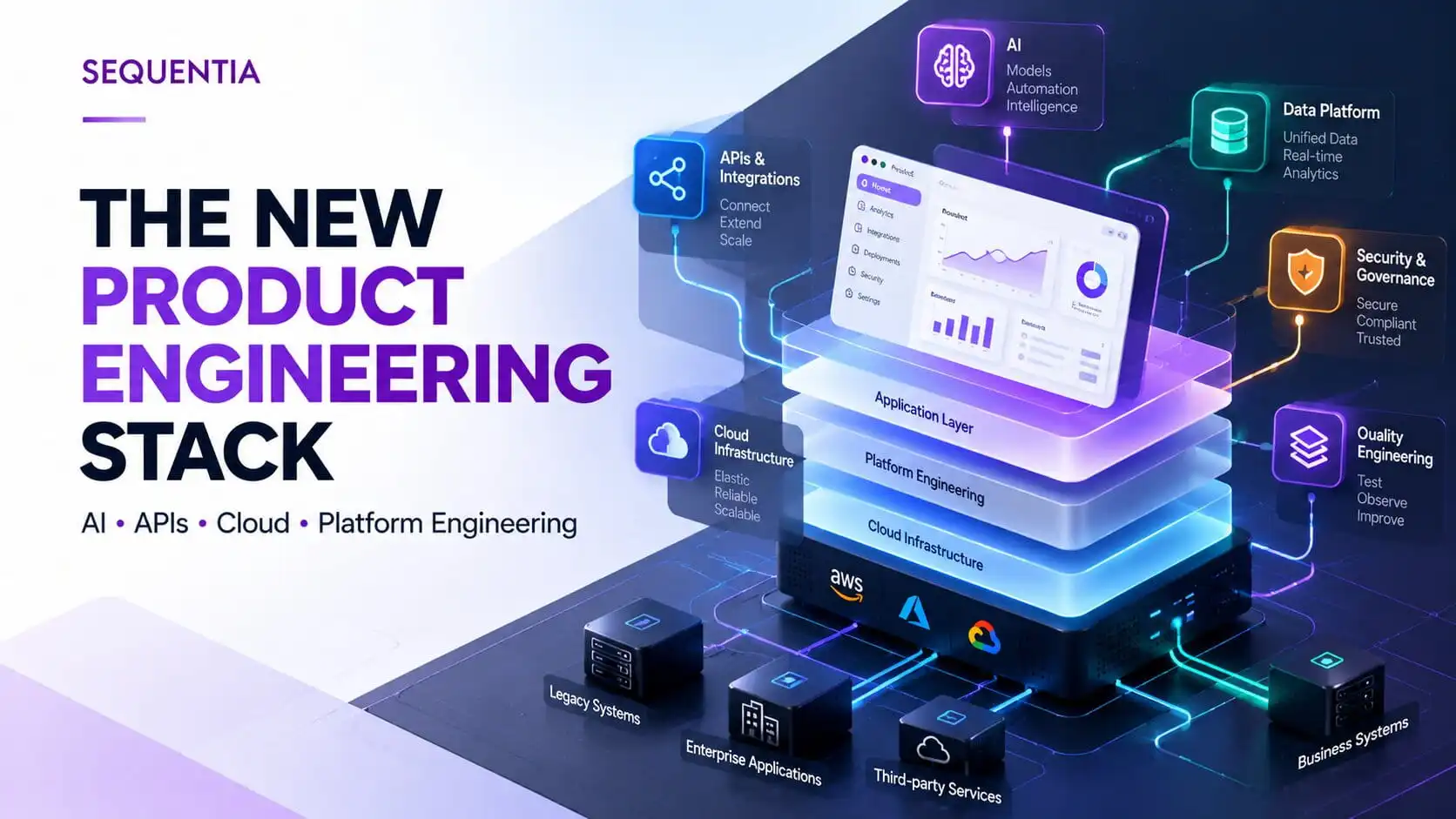
A customer may see a simple application, a personalized recommendation or an intelligent workflow. Behind that experience can be a combination of AI services, APIs, cloud infrastructure, data platforms, application services, security controls, observability and automated quality engineering.
This is changing the product engineering stack.
The important shift is not that organizations have adopted more technologies. It is that these technologies increasingly need to operate as one engineering environment.
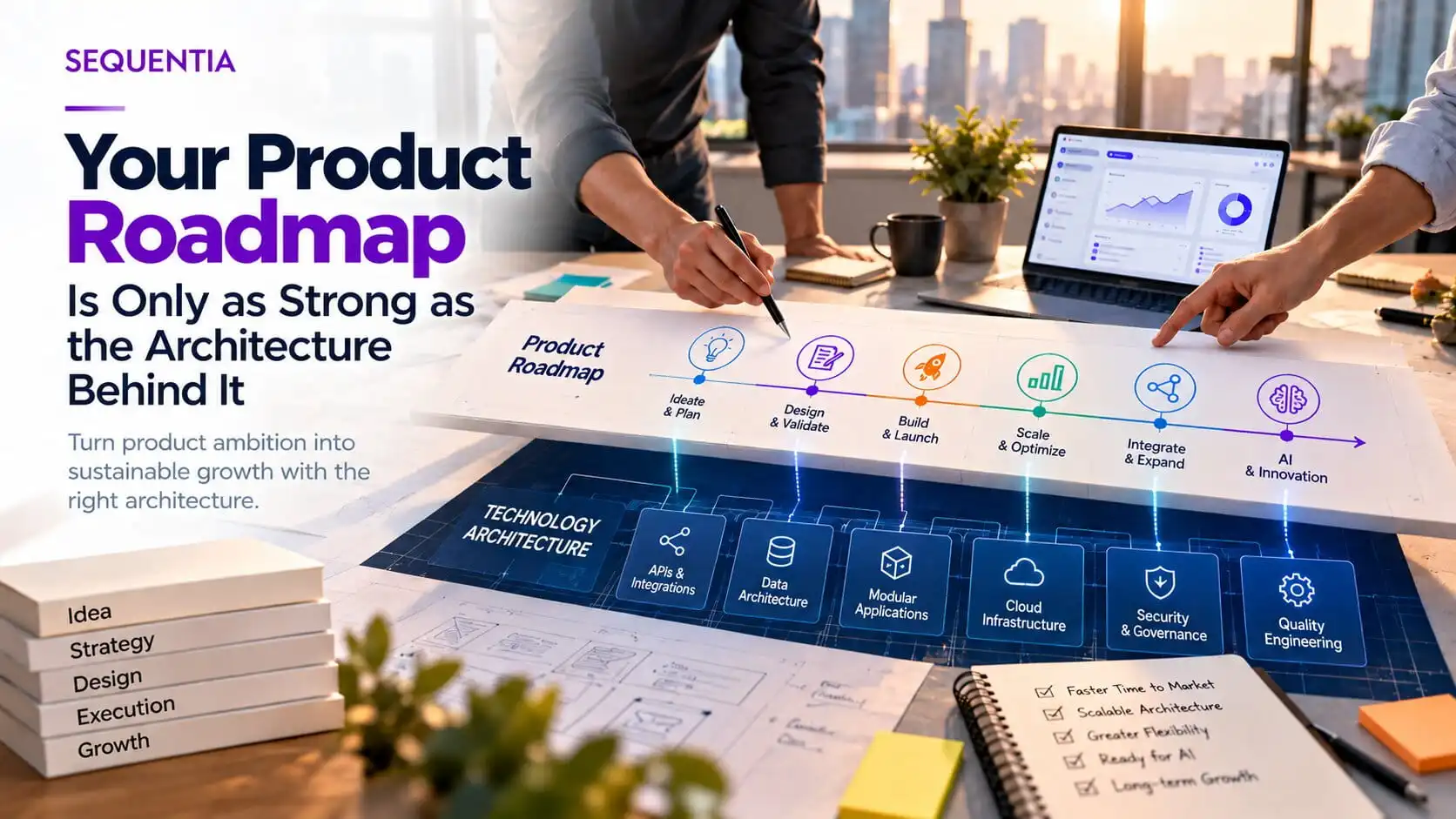
Product engineering therefore has to move beyond feature delivery and consider the architecture that allows a product to evolve continuously.
Product Engineering Is Becoming an Integrated Engineering System
Traditional product development could often be organized around application features.
Build the feature, connect the database, deploy the application and move to the next requirement.
Modern products operate differently.
An application may depend on several APIs, consume multiple external services, use cloud-native infrastructure, incorporate AI capabilities and interact with data platforms that are shared across products.
A change in one layer can affect several others.
This makes architectural thinking increasingly important to product engineering.
The question is no longer simply whether a team can build a feature.
It is whether the engineering environment can support the next ten features, integrations and technology changes without creating unnecessary complexity.
AI Is Becoming Part of the Product Architecture
AI is increasingly being embedded directly into digital products rather than existing as a separate experimental capability.
Search, recommendations, document processing, customer support, workflow automation and intelligent decision support can all become part of the product experience.
That means AI needs to be considered alongside application architecture.
The model or AI service is only one component.
The product still needs appropriate data access, APIs, business logic, security, evaluation, monitoring and infrastructure around it.
This is why AI engineering is becoming increasingly connected to product engineering.
The objective is not simply to add an AI capability.
It is to integrate intelligence into a product without compromising reliability, security, user experience or maintainability.
APIs Are Becoming the Connection Layer
As products become more distributed, APIs become increasingly important to the overall engineering architecture.
A modern product may need to connect with internal services, enterprise applications, payment platforms, external SaaS products, AI services and data platforms.
Without a well-designed API strategy, these connections can quickly become difficult to manage.
A strong API architecture creates boundaries between capabilities and allows systems to evolve with greater independence.
This becomes particularly important when organizations are modernizing existing products.
Rather than rebuilding an entire application, teams can progressively expose capabilities through APIs and introduce new product experiences around them.
API driven development therefore becomes more than an integration technique.
It becomes part of the product's architectural strategy.
Cloud Is Becoming an Engineering Foundation
Cloud infrastructure has also changed the way product engineering teams approach scalability.
Modern applications may require independent scaling of application services, databases, AI workloads, background processing and other components.
Cloud environments provide the infrastructure flexibility to support these patterns, but infrastructure alone does not create a scalable product.
Architecture still determines how effectively that infrastructure can be used.
Poorly designed applications can simply move existing complexity into the cloud.
Effective product engineering considers application architecture, infrastructure, deployment, observability, security and cost as connected decisions.
The objective is not merely to run a product in the cloud.
It is to create an engineering environment where the product can evolve efficiently.
Platform Engineering Is Changing How Teams Build
As engineering environments become more complex, development teams increasingly need reliable internal platforms and reusable capabilities.
Platform engineering helps create that foundation.
Instead of every product team solving deployment, infrastructure configuration, monitoring, security controls and operational processes independently, shared engineering capabilities can provide consistent paths for development and delivery.
This can improve engineering productivity while reducing unnecessary variation across products.
The value is particularly significant for organizations managing multiple digital products or larger engineering teams.
A strong platform allows product teams to focus more of their attention on product outcomes while the underlying engineering environment provides repeatable capabilities.
Quality Engineering Has to Move With the Stack
The complexity of the modern product stack also changes the role of quality engineering.
Testing cannot remain concentrated at the end of the development cycle when products depend on distributed services, APIs, cloud infrastructure and AI capabilities.
Quality needs to become continuous.
API behaviour, integrations, application workflows, performance, security and AI-specific outcomes can all require validation throughout the product lifecycle.
This makes quality engineering part of the engineering architecture rather than simply a testing activity.
Architecture Must Support Continuous Change
Perhaps the most important characteristic of a modern product engineering stack is its ability to evolve.
AI services will change.
Cloud infrastructure will evolve.
APIs will expand.
Business requirements will shift.
New integrations will appear.
The product architecture needs to absorb these changes without requiring the entire system to be redesigned each time.
This is where modularity, clear service boundaries, API driven architecture, automated delivery and strong platform capabilities become valuable.
The goal is not to predict every future technology.
It is to build an architecture capable of adapting when that technology arrives.
The Stack Is Becoming the Product Engineering Strategy
AI, APIs, cloud and platform engineering should not be viewed as separate technology initiatives competing for attention.
They are increasingly interconnected components of modern product engineering.
AI brings intelligence.
APIs connect capabilities.
Cloud provides infrastructure flexibility.
Platform engineering creates repeatable engineering foundations.
Quality engineering protects reliability.
Security and observability provide the controls needed to operate the environment responsibly.
The product sits at the centre of this ecosystem.
That is why modern product engineering increasingly requires architectural thinking across the entire stack.
The strongest digital products are not simply built with more technologies. They are engineered so those technologies can work together, evolve independently and continuously create value.
.webp)
Pune
Sequentia Software Solutions Pvt Ltd
401, Koyna, Mohan Nagar,
Baner, Pune, Maharashtra - 411045.
Jalgaon
Sequentia Software Solutions Pvt Ltd
06, Rambhau Joshi Market, Opposite Golani Market, Navi Peth, Jalgaon, Maharashtra - 425001.