From Legacy to Leading-Edge: How Sequentia Transforms Enterprise Applications
Introduction: The Legacy Challenge Every Enterprise Faces
Every large enterprise carries a digital past — layers of legacy systems that once powered growth but now weigh down innovation. These systems, often built decades ago, still form the backbone of operations. Yet, they struggle to keep pace with today’s business demands: cloud-native agility, real-time analytics, and seamless customer experiences.
At Sequentia, we’ve seen this story play out countless times. Enterprises know they need to modernize but face real challenges - technical debt, data silos, integration nightmares, and organizational resistance to change.
But here’s the truth: modernizing isn’t just about technology. It’s about reimagining how business runs in the digital age.
That’s where Sequentia steps in - helping organizations go from legacy to leading-edge.
1. Understanding Legacy Modernization: More Than a Code Rewrite
Application modernization is often misunderstood as “lifting and shifting” code from old servers to the cloud. In reality, it’s a strategic evolution that touches every layer of the business - from processes and data to customer interactions.
At Sequentia, we approach modernization through three interconnected dimensions:
-
Technology Transformation: Migrating from monolithic architectures to microservices and API-driven ecosystems.
-
Experience Redesign: Enhancing usability, accessibility, and responsiveness to deliver digital experiences that today’s users expect.
-
Operational Agility: Enabling continuous integration and delivery, automated testing, and real-time monitoring.
This holistic approach ensures that modernization creates real business outcomes - not just new tech stacks.
2. Common Symptoms of Outdated Systems
Before jumping into modernization, enterprises often recognize familiar pain points that signal it’s time for change:
-
Slow time-to-market: Releasing a new feature takes months due to outdated architectures.
-
Integration bottlenecks: Legacy systems can’t easily communicate with modern tools or platforms.
-
Rising maintenance costs: More time and money go into keeping the lights on than innovating.
-
Security vulnerabilities: Older systems expose organizations to data breaches and compliance risks.
-
Poor customer experience: Front-end applications lag, fail, or lack the personalization users expect.
Recognizing these signs is the first step toward modernization.
3. Sequentia’s Approach: Transform with Strategy, Not Chaos
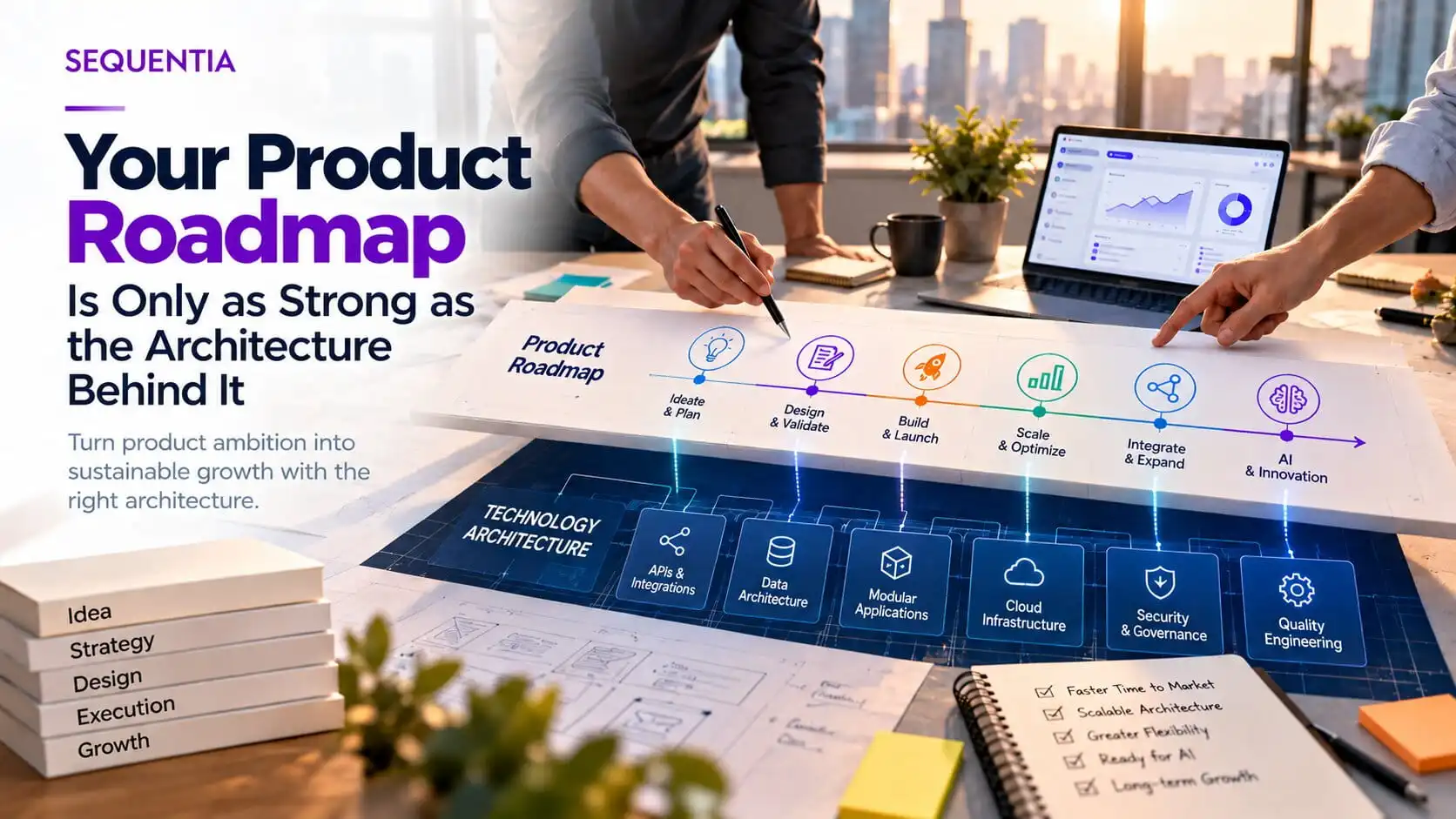
Sequentia follows a strategy-first approach to modernization, ensuring that every transformation aligns with long-term business goals.
a. Product Tech Advisory
We start with in-depth audits - assessing system dependencies, technical debt, and user needs. Our team then defines a transformation roadmap that balances innovation with stability.
b. Application Transformation
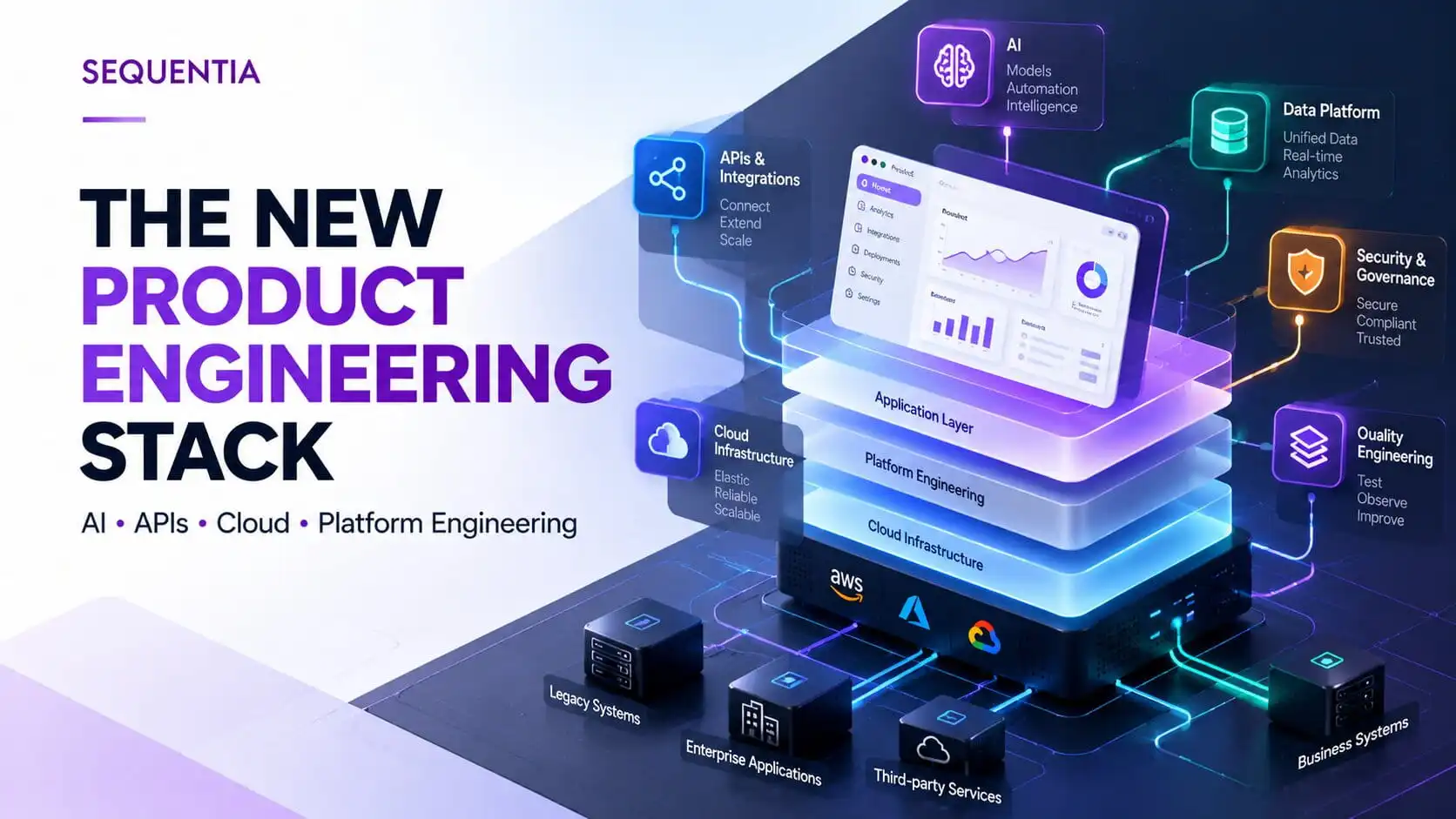
Sequentia re-engineers legacy systems into cloud-native, scalable, and modular architectures. Whether migrating to microservices or implementing containerization, we ensure minimal disruption and maximum efficiency.
c. Digital Application Development
Our teams rebuild applications using the latest frameworks and best practices - ensuring modern UI/UX, robust backend performance, and future scalability.
d. API-Driven Development
Legacy modernization often hinges on interoperability. Our API-first approach allows new systems to connect seamlessly with old ones, ensuring smooth transitions and incremental modernization.
e. Quality Engineering
We integrate automated testing, continuous integration (CI/CD), and DevOps pipelines to ensure quality and speed go hand-in-hand.
f. Agile Enterprise Enablement
Sequentia helps enterprises adopt agile frameworks that transform not only software delivery but also organizational culture - encouraging collaboration, adaptability, and continuous improvement.
4. Modernization in Action: A Real-World Scenario
Case Study Example:
A financial services enterprise approached Sequentia with an outdated loan management system. Built in the early 2000s, the application was monolithic, slow, and expensive to maintain.
Our Solution:
-
Conducted a strategic assessment to identify modernization priorities.
-
Implemented a microservices-based architecture using containerized deployment on AWS.
-
Redesigned the user interface with a modern, responsive front-end using React.
-
Integrated an API gateway to allow third-party fintech tools and customer portals to connect easily.
-
Applied DevOps practices for continuous deployment and monitoring.
Outcome:
-
Reduced deployment time from weeks to hours.
-
Improved system uptime to 99.9%.
-
Enabled real-time loan approvals and API integrations with new partners.
-
Cut operational costs by 30%.
This transformation didn’t just modernize technology - it reinvented the client’s ability to compete in a fast-moving market.
5. The Business Impact of Modernization
When done right, modernization drives measurable business results:
-
Speed: Rapid deployment cycles accelerate time-to-market.
-
Scalability: Cloud-native systems grow effortlessly with business demand.
-
Security: Up-to-date tech stacks reduce vulnerabilities and compliance issues.
-
Customer Satisfaction: Enhanced digital experiences drive engagement and loyalty.
-
Innovation: Freed from legacy constraints, teams can focus on new product innovation.
At Sequentia, we measure success not by lines of code modernized, but by business impact achieved.
6. The Future of Enterprise Modernization: Beyond Technology
The next phase of modernization is continuous transformation.
Technologies evolve — from edge computing to AI-driven automation - and so must enterprises. Future-ready organizations don’t treat modernization as a one-time event but as an ongoing process.
Sequentia helps enterprises embrace this mindset by establishing modern engineering foundations - flexible architectures, data-driven insights, and scalable infrastructure - that can evolve with changing market dynamics.
As the digital world accelerates, agility becomes the ultimate competitive advantage.
7. Why Choose Sequentia
Modernization is a journey - and every journey needs a reliable guide.
Sequentia brings together strategic consulting, engineering excellence, and agile delivery to ensure your transformation succeeds at every stage.
Our differentiators include:
-
Deep cross-domain expertise (finance, healthcare, manufacturing, education).
-
Proven frameworks for risk-managed modernization.
-
Seamless collaboration between product managers, designers, and engineers.
-
Focus on measurable business outcomes - not just technical delivery.
With Sequentia, your legacy isn’t a liability - it’s the foundation for the future.
Conclusion
Modernizing legacy applications is not about replacing the past. It’s about redefining the future of your enterprise.
Whether you’re migrating core systems, rebuilding digital products, or scaling operations for the cloud era — Sequentia helps you make the transition smooth, strategic, and sustainable.
From legacy to leading-edge, our mission is simple: transform today’s challenges into tomorrow’s growth opportunities.
.webp)
Pune
Sequentia Software Solutions Pvt Ltd
401, Koyna, Mohan Nagar,
Baner, Pune, Maharashtra - 411045.
Jalgaon
Sequentia Software Solutions Pvt Ltd
06, Rambhau Joshi Market, Opposite Golani Market, Navi Peth, Jalgaon, Maharashtra - 425001.